A soft or spongy brake pedal usually means the brake system isn’t building or maintaining hydraulic pressure as it should. Air trapped in the brake lines is one of the most common causes, but low or leaking brake fluid, damaged brake lines or hoses, overheated fluid, a failing master cylinder, and some calliper problems can produce similar symptoms.
A brake pedal that feels different from normal shouldn’t be ignored. The distinction between a spongy pedal and a pedal that slowly sinks toward the floor is especially useful because they can point to different hydraulic problems.
What Should a Brake Pedal Feel Like?
A properly functioning brake pedal should feel firm, consistent, and predictable.
When you press it, the force from your foot is transferred through the brake system’s hydraulic fluid to the callipers or wheel cylinders. Brake fluid transmits this pressure efficiently, while air is compressible. That’s why air inside the hydraulic system can make the pedal feel soft or mushy.
Pedal feel varies somewhat between vehicles, so the best reference is how your own car normally feels.
A noticeable change is more useful diagnostically than whether the pedal feels slightly softer than another vehicle you’ve driven.
Soft vs. Spongy vs. Sinking Brake Pedal
These descriptions are often used interchangeably, but they can point toward different problems.
Soft or spongy pedal
The pedal feels mushy and travels farther than normal before the brakes respond firmly.
Common possibilities include:
- Air in the brake lines
- Low brake fluid
- Hydraulic leaks
- Flexible or damaged brake hoses
- Other hydraulic problems
Brake pedal slowly sinks
If you press the pedal firmly and hold steady pressure, then notice that it gradually moves closer to the floor, a master-cylinder problem or hydraulic pressure loss is possible. Worn internal seals in the master cylinder can allow fluid pressure to bypass internally.
Very hard brake pedal
A hard pedal is a different problem. It can be associated with the brake booster, vacuum supply, or power-assist system rather than the hydraulic causes discussed here.
7 Common Causes of a Soft or Spongy Brake Pedal
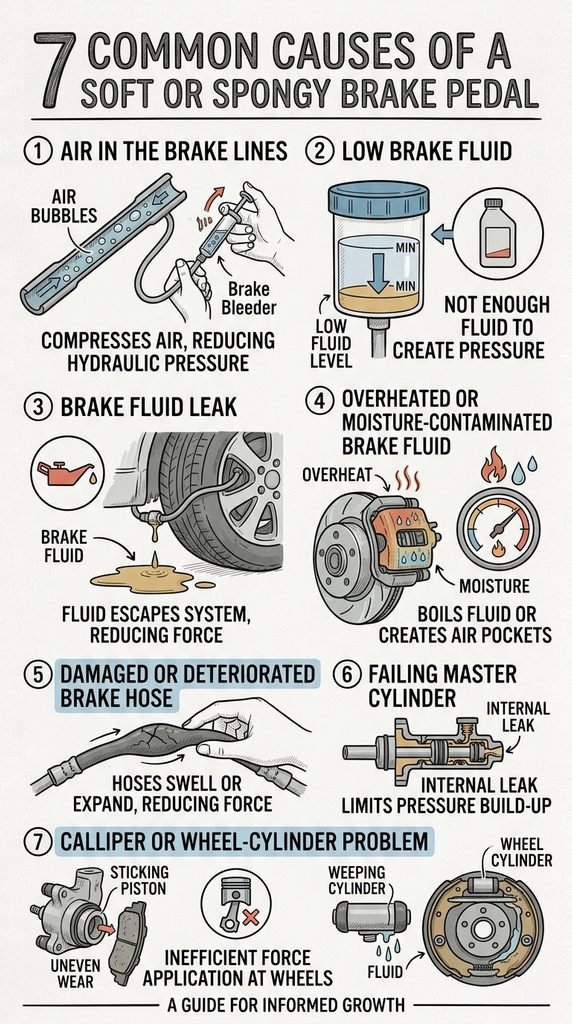
1. Air in the Brake Lines
Air in the hydraulic brake system is one of the most common causes of a spongy pedal.
Brake fluid transfers pressure efficiently, but air compresses when you press the brake pedal. Instead of immediately transmitting the force to the callipers or wheel cylinders, some of your pedal movement is used to compress the trapped air.
The result is a pedal that feels soft and may travel farther than normal.
Air can enter the system after:
- Brake-line repairs
- Caliper replacement
- Master-cylinder replacement
- Other hydraulic component replacement
- Incorrect bleeding
- A hydraulic leak
- Very low brake-fluid level
Air can also remain trapped in portions of the system around the ABS hydraulic unit. A GM service bulletin specifically documents cases where air becomes trapped in brake lines after hydraulic components are disconnected or replaced, requiring additional bleeding procedures.
The usual fix is to bleed the brake system correctly. On some vehicles, the manufacturer specifies additional procedures when air has entered the ABS hydraulic unit.
2. Low Brake Fluid
A low brake-fluid reservoir can contribute to a soft brake pedal, particularly if the level has become low enough for air to enter the hydraulic system.
However, don’t assume brake fluid simply “gets used up.”
Brake fluid doesn’t normally disappear during routine braking. A low level can be related to normal brake-pad wear, but it can also indicate a leak or another hydraulic-system problem.
Check the reservoir when the vehicle is parked safely and use the fluid type specified by the manufacturer.
If the level is unexpectedly low, find out why rather than repeatedly topping it up.
For more information about brake-fluid maintenance, see our guide on how often you should change brake fluid.
3. Brake Fluid Leak
A hydraulic leak is a more serious possibility.
Brake fluid can escape from:
- Brake lines
- Flexible brake hoses
- Calipers
- Wheel cylinders
- Master cylinder
- Hydraulic connections and fittings
As fluid escapes, hydraulic pressure can be compromised. If enough fluid is lost, air can also enter the system and make the pedal feel spongy.
Look for an unexplained drop in the brake-fluid reservoir level or wet, oily residue around brake components.
A suspected hydraulic leak shouldn’t be treated as a minor maintenance issue. Brake pressure is directly related to your ability to stop the vehicle.
4. Overheated or Moisture-Contaminated Brake Fluid
Brake fluid absorbs moisture over time. Under severe braking conditions, moisture-contaminated fluid can produce vapour when temperatures become high enough.
Vapour is compressible, so it can contribute to a soft pedal and reduced braking response.
This is more likely after severe brake use, such as:
- Long mountain descents
- Repeated hard braking
- Towing
- Track driving
- Brake drag or overheating
If the pedal becomes soft after heavy braking, allow the brakes to cool and have the system inspected. Don’t assume cooling alone has solved the problem.
If the pedal remains soft after the brakes return to normal temperature, investigate the hydraulic system.
5. Damaged or Deteriorated Brake Hose
Flexible brake hoses connect the rigid brake lines to the moving wheel assemblies. They have to tolerate hydraulic pressure while allowing the suspension and steering to move.
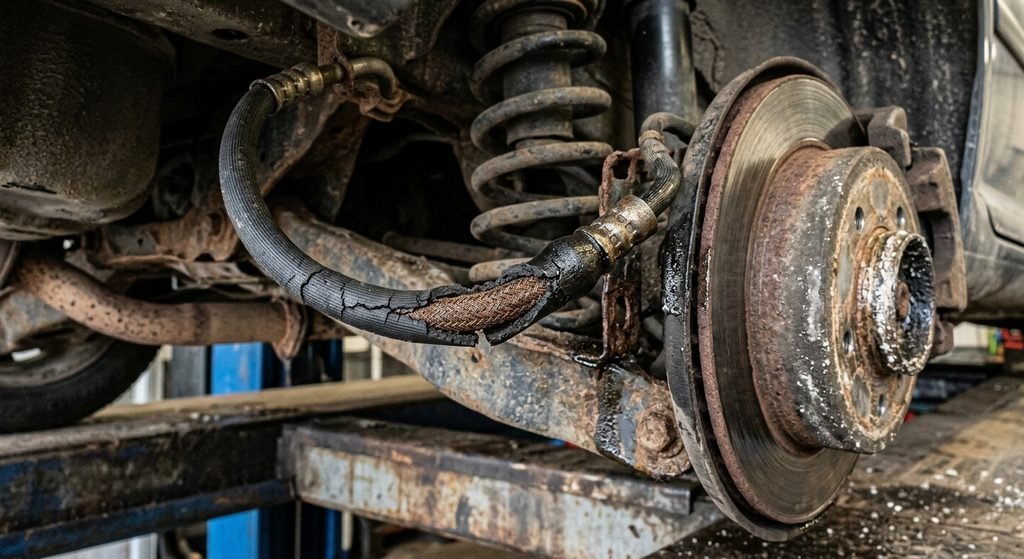
A damaged hose can leak or otherwise contribute to abnormal hydraulic behaviour.
Look for:
- Cracks
- Swelling
- Abrasion
- Corrosion around fittings
- Wetness
- Physical damage
Brake hoses can deteriorate internally as well, so a visual inspection doesn’t always provide a complete diagnosis.
6. Failing Master Cylinder
The master cylinder converts brake-pedal force into hydraulic pressure.
Internal seals can deteriorate with age or contamination. When that happens, hydraulic pressure may bypass internally instead of being maintained correctly.
One classic clue is a brake pedal that slowly sinks while you maintain steady pressure.
Other symptoms can include:
- Soft or inconsistent pedal
- Excessive pedal travel
- Reduced braking response
- Low brake fluid
- Possible external fluid leakage
A sinking pedal shouldn’t be dismissed as normal wear.
7. Calliper or Wheel-Cylinder Problem
A damaged or sticking calliper can affect how the brake pads contact the rotor and may contribute to abnormal pedal behaviour.
Additional symptoms can include:
- Uneven brake-pad wear
- Vehicle pulling while braking
- Brake drag
- Burning smell
- One wheel becoming unusually hot
- Squeaking or other brake noises
Vehicles with rear drum brakes use wheel cylinders rather than rear disc callipers, and a problem there can also affect braking performance.
A calliper issue isn’t the first explanation for every spongy pedal, but it should be considered when the soft pedal appears alongside uneven braking symptoms.
Can Air in Brake Lines Cause a Spongy Pedal?
Yes. This is one of the classic explanations.
The hydraulic system works because brake fluid transfers pressure from the master cylinder to the wheel brakes. Air behaves differently because it compresses when pressure is applied.
The basic sequence is:
Pedal pressure → hydraulic fluid → caliper/wheel cylinder
With air present:
Pedal pressure → air compresses → delayed pressure transfer → longer, softer pedal
Air can enter following brake-system repairs, hydraulic leaks, incorrect bleeding, or sufficiently low fluid levels.
A manufacturer service bulletin describes spongy pedal conditions caused by air remaining in the brake system after hydraulic component replacement.
Proper bleeding usually resolves the problem when trapped air is the actual cause. If the pedal becomes spongy again after bleeding, the system should be checked for the reason air entered in the first place.
Why Is My Brake Pedal Soft After a Brake Job?
A soft brake pedal immediately after brake work deserves attention.
If the hydraulic system was opened during the repair, air may have entered the lines. It isn’t always possible to remove every air pocket with a basic bleeding procedure, particularly if air has entered an ABS hydraulic unit or another high point in the system.
Possible causes include:
- Air remaining in the brake lines
- Incorrect bleeding procedure
- Air trapped in the ABS hydraulic unit
- A loose hydraulic connection
- Brake-fluid leak
- Incorrectly installed hydraulic component
Brake-pad replacement by itself doesn’t normally explain a genuinely spongy hydraulic pedal.
If the pedal feels significantly different immediately after service, return to the repair shop rather than assuming the brakes simply need time to “settle.”
Why Does My Brake Pedal Go to the Floor?
A brake pedal that reaches the floor is a serious warning sign.
Possible causes include:
- Major hydraulic fluid loss
- Significant air in the brake system
- Master-cylinder failure
- Hydraulic component failure
- Extremely low brake fluid
A GM technical bulletin describes cases involving a soft pedal or pedal reaching the floor where air in the brake system was identified as the cause.
Another possibility is a master cylinder that cannot maintain hydraulic pressure internally.
Whatever the cause, don’t drive a vehicle when the brake pedal goes to the floor or braking performance is severely reduced. Arrange for the vehicle to be inspected or towed.
How to Check What Is Causing a Spongy Brake Pedal
You can perform some basic checks without opening the hydraulic system.
1. Compare the pedal with its normal feel
Think about how the pedal normally feels. A sudden change is significant.
2. Check the brake-fluid level
Park safely and inspect the reservoir according to the vehicle manufacturer’s instructions.
A low level needs an explanation.
3. Look for obvious leaks
Inspect visible brake lines, flexible hoses, callipers, and the area around the master cylinder for fluid residue.
Don’t rely on the absence of an obvious puddle. Some hydraulic leaks can be small or difficult to see.
4. Check whether the pedal sinks
With the vehicle safely stationary, firm and steady pedal pressure can reveal whether the pedal gradually moves downward.
A sinking pedal can point toward loss of hydraulic pressure or a master-cylinder problem.
5. Think about recent brake work
If the problem appeared immediately after replacing a calliper, brake hose, master cylinder, or other hydraulic component, air in the system becomes a strong possibility.
6. Check for warning lights
Brake or ABS warning lights can indicate a hydraulic or electronic brake-system problem.
7. Pay attention to braking performance
Ask yourself whether the vehicle now takes longer to stop, pulls to one side, requires multiple pedal pumps, or behaves differently under braking.
A significant change in braking performance makes this an urgent inspection rather than a DIY troubleshooting exercise.
How Are Spongy Brakes Fixed?
The correct repair depends on the cause.
Possible repairs include:
- Bleeding the hydraulic brake system
- Removing trapped air
- Repairing a brake-fluid leak
- Replacing damaged brake hoses or lines
- Replacing contaminated or degraded brake fluid when required
- Servicing or replacing a faulty master cylinder
- Repairing affected callipers or wheel cylinders
- Performing the manufacturer’s ABS bleeding procedure when necessary
Bleeding the brakes is appropriate when air is the problem, but it isn’t a universal fix.
If air returns after bleeding, the system should be checked for a leak or component fault. Some vehicles also require manufacturer-specific bleeding procedures when air has entered the ABS hydraulic unit.
Can You Drive With a Soft or Spongy Brake Pedal?
A significantly soft or spongy brake pedal should not be treated as safe to drive with.
The risk is especially high when:
- The pedal travels unusually close to the floor
- Stopping distance has increased
- The pedal continues getting softer
- Brake fluid is leaking
- A brake warning light is illuminated
- The pedal requires repeated pumping
- Braking feels inconsistent
A mild change in pedal feel still deserves inspection, but a pedal approaching the floor or a clear loss of braking performance warrants stopping the vehicle and arranging professional assistance.
Don’t test the brakes by driving at speed to see whether the problem gets better.
Pumping the Brake Pedal Makes It Firmer: What Does That Mean?
If repeatedly pressing the brake pedal makes it temporarily firmer, there may be excessive movement or compressibility somewhere in the brake system.
Possible causes include:
- Air in the hydraulic lines
- Excessive pad or shoe clearance
- Hydraulic-system problems
- Other brake-component issues
This behaviour is a diagnostic clue, not a repair.
Pumping the pedal can temporarily change how the brakes feel without correcting the underlying problem. If you need to pump the brakes repeatedly to obtain a firm pedal, the system should be inspected.
Soft Brake Pedal vs. Hard Brake Pedal
The direction of the change matters.
| Pedal feel | Possible causes |
|---|---|
| Soft or spongy | Air, low fluid, hydraulic leak |
| Pedal slowly sinks | Master cylinder or hydraulic pressure problem |
| Very low pedal | Air, excessive clearance, hydraulic issue |
| Hard pedal | Brake booster, vacuum, or power-assist problem |
| Pulsating pedal | Rotor/DTV problem or ABS operation |
A pulsating pedal is different from a spongy pedal. If the pedal rhythmically pushes back against your foot during braking, see our article on why your car vibrates when braking and our guide to warped brake rotors.
How to Prevent a Spongy Brake Pedal
Keep the brake-fluid reservoir at the correct level and investigate any unexpected loss.
Follow the vehicle manufacturer’s recommended brake-fluid service interval. Moisture contamination can affect brake-fluid performance, particularly under high-temperature braking conditions.
Have hydraulic components bled correctly whenever the brake system is opened. Inspect brake lines and flexible hoses for corrosion or damage, especially on vehicles exposed to road salt and harsh winter conditions.
Most importantly, don’t ignore changes in pedal feel. A brake pedal that suddenly becomes softer is a useful warning that something in the braking system needs attention.
FAQ
Why is my brake pedal soft or spongy?
Air in the brake lines is a common cause, but low brake fluid, hydraulic leaks, damaged hoses, overheated fluid, a failing master cylinder, and other brake-system problems can also cause a soft pedal.
Can low brake fluid cause a soft pedal?
Yes. Low fluid can contribute to a soft pedal, particularly if the level becomes low enough for air to enter the hydraulic system. An unexpectedly low level should also prompt an inspection for leaks or other causes.
Can air in brake lines cause a spongy brake pedal?
Yes. Air compresses when you press the pedal, which reduces how directly hydraulic pressure is transferred to the brakes. Proper brake bleeding can remove the trapped air.
Why is my brake pedal soft after a brake job?
If the hydraulic system was opened during the repair, air may remain in the brake lines or ABS hydraulic unit. An incorrect bleeding procedure, loose connection, or hydraulic leak can also cause a soft pedal.
Why does my brake pedal go to the floor?
Possible causes include significant air in the hydraulic system, very low brake fluid, a hydraulic leak, or master-cylinder failure. A brake pedal reaching the floor should be treated as a serious safety problem.
Why does pumping the brake pedal make it firmer?
Temporary improvement after repeated pumping can indicate air in the hydraulic system, excessive brake-component clearance, or another hydraulic problem. Pumping the pedal doesn’t fix the underlying cause.
Can a bad master cylinder cause a soft brake pedal?
Yes. Worn internal seals can prevent the master cylinder from maintaining hydraulic pressure. A pedal that slowly sinks while steady pressure is applied is a particularly important clue.
Can a brake-fluid leak cause a spongy pedal?
Yes. Losing brake fluid can reduce hydraulic pressure and may allow air to enter the system. Brake-fluid leaks require prompt attention because they can reduce braking performance.
Can old brake fluid cause a soft pedal?
Moisture-contaminated brake fluid can contribute to reduced braking performance and pedal softness under severe braking because absorbed water can form compressible vapour at high temperatures.
Can I drive with a spongy brake pedal?
A significantly soft or spongy pedal shouldn’t be considered safe to drive with, particularly when braking performance has changed, the pedal approaches the floor, fluid is leaking, or a warning light is illuminated.
How do you fix a spongy brake pedal?
The repair depends on the cause. The system may need bleeding to remove air, a leak may need repair, damaged brake lines or hoses may need replacement, or the master cylinder, callipers, or other components may require service.