
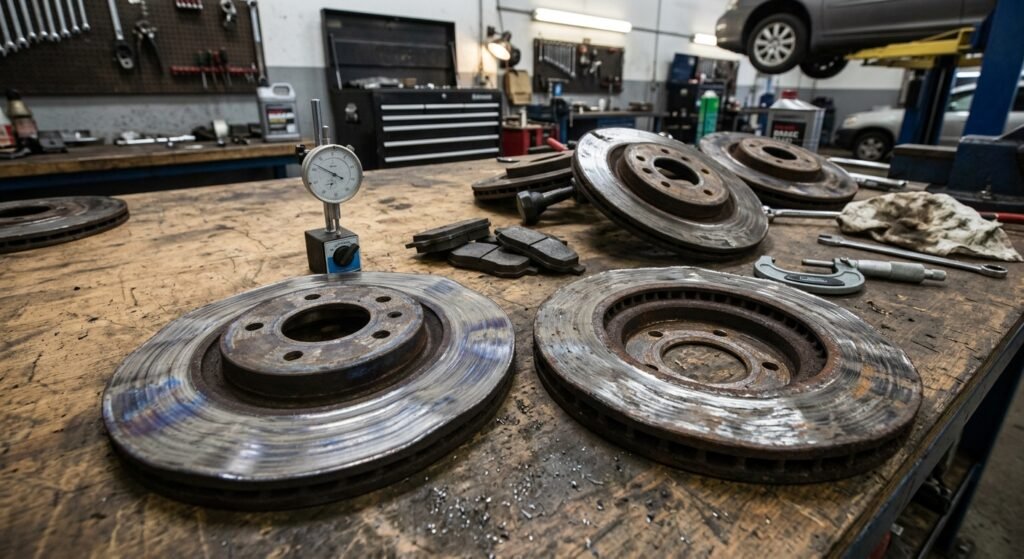
Warped brake rotors are one of the most common explanations drivers hear when a car shakes, the steering wheel vibrates, or the brake pedal pulses during braking.
There is an important technical detail, though. In many cases, the rotor isn’t literally bent or permanently warped. Brake judder is often caused by disc thickness variation (DTV), lateral runout, or uneven friction-material deposits on the rotor. These conditions can produce the same symptoms drivers commonly describe as “warped rotors.”
The distinction matters because replacing a rotor without finding why the vibration developed can allow the problem to come back.
What Does “Warped Brake Rotors” Actually Mean?
“Warped brake rotors” is widely used as a general term for brake vibration, but several different conditions can cause the problem.
Disc Thickness Variation
Disc Thickness Variation (DTV) means the rotor has measurable differences in thickness around its braking surface.
As the rotor rotates, the brake pad encounters thicker and thinner sections. This changes the contact and braking force and can produce a rhythmic pedal pulsation or brake judder.
Lateral Runout
Lateral runout is side-to-side movement of the rotor as it rotates.
Excessive runout can result from incorrect mounting, contamination between the hub and rotor, hub problems, or other installation issues. Over time, excessive runout can contribute to uneven rotor wear and DTV.
Uneven Friction-Material Deposits
Brake pads transfer a controlled layer of friction material onto the rotor during normal use. If that material is deposited unevenly, sections of the rotor can behave differently under braking.
This can create judder without the rotor being physically bent.
So while “warped brake rotors” is the right search term, the actual diagnosis may be DTV, runout, deposits, or a combination of these conditions.
7 Symptoms of Warped Brake Rotors
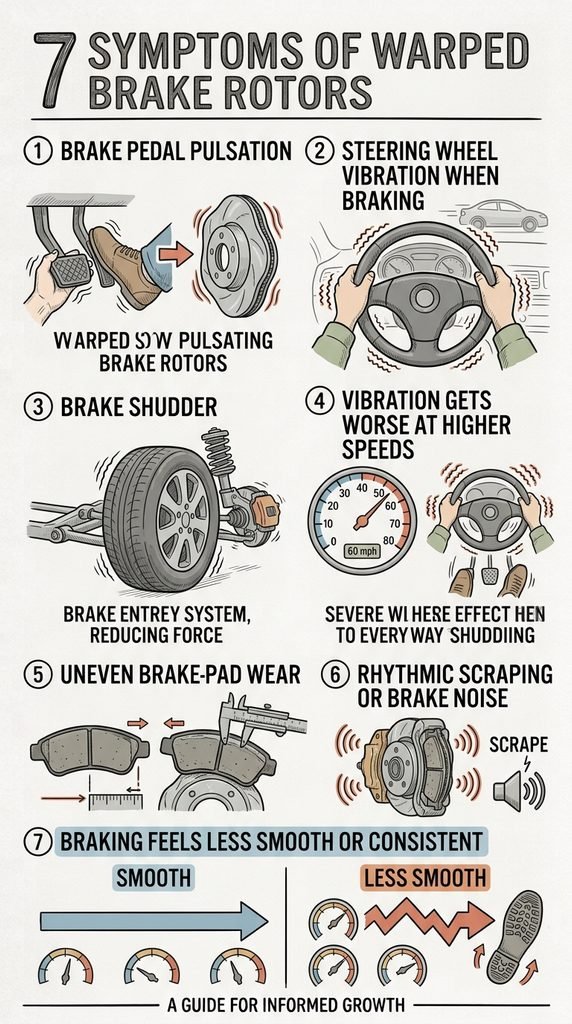
1. Brake Pedal Pulsation
A pulsing brake pedal is one of the classic signs.
As the rotor rotates, thickness variation can cause the brake pad and calliper piston to move slightly. The driver may feel this as a repeated pushback through the pedal during braking.
The pulsation may become more noticeable as you slow from higher speeds.
Don’t confuse this with normal ABS operation. ABS can intentionally pulse the brake pedal during hard braking when the system is preventing wheel lockup.
2. Steering Wheel Vibration When Braking
If the steering wheel shakes when you apply the brakes, a front brake or front-end problem deserves attention.
Possible causes include:
- Front rotor DTV
- Excessive rotor or hub runout
- Uneven pad deposits
- Sticking front calliper
- Hub or wheel problems
- Worn steering or suspension components
Steering-wheel vibration isn’t proof that the front rotors are warped, but braking-related vibration makes the brake system a logical starting point.
3. Brake Shudder
Brake shudder is a broader description of the shaking or juddering you feel when braking.
It may be felt through:
- Steering wheel
- Brake pedal
- Seat
- Floor
- Vehicle body
The severity can range from barely noticeable vibration to strong shaking during braking.
4. Vibration Gets Worse at Higher Speeds
Rotor-related vibration is often more noticeable when braking from higher speeds.
For example, the car may feel completely smooth while cruising at highway speed, but the steering wheel starts shaking when you brake from 70 mph to 40 mph.
Mazda’s brake-judder guidance specifically notes that this type of vibration tends to be more noticeable when slowing from higher speeds.
5. Uneven Brake-Pad Wear
A rotor with thickness variation, excessive runout, or an uneven surface can contribute to inconsistent pad contact.
Look for:
- One pad substantially thinner than another
- Tapered pad wear
- Uneven wear between inner and outer pads
- Unusual wear patterns on the friction surface
Uneven pad wear can also indicate a sticking calliper or other brake-system problem, so it shouldn’t automatically be blamed on the rotor.
6. Rhythmic Scraping or Brake Noise
Some rotor problems produce a noise that changes with wheel rotation.
You may hear a repeated scraping, rubbing, or other rhythmic sound that becomes more noticeable while braking.
Noise alone isn’t enough to diagnose rotor DTV or runout. Brake pads, hardware, callipers, wheel bearings, and other components can also produce noises.
7. Braking Feels Less Smooth or Consistent
A vehicle may still stop normally while developing rotor-related judder, but the braking experience can become less smooth.
You may notice:
- Pulsation
- Shudder
- Uneven pedal feel
- Steering vibration
- Increasing vibration as braking continues
Any persistent change in brake behaviour deserves inspection rather than being dismissed as normal.
What Causes Brake Rotors to Warp or Develop Thickness Variation?
Several different conditions can create what drivers call warped rotors.
Excessive Brake Heat
Repeated heavy braking can generate considerable heat.
Examples include:
- Long mountain descents
- Repeated emergency stops
- Towing heavy loads
- Aggressive driving
- Track use
- A brake that is dragging
Extreme heat can damage both rotors and brake pads. Blue or dark heat-affected areas on a rotor can be a warning sign of excessive thermal loading.
Uneven Brake-Pad Material Transfer
Brake-pad material should transfer relatively evenly to the rotor surface during normal operation.
Uneven transfer can create areas with different friction characteristics and contribute to brake judder. Bedding-in procedures are designed in part to establish a consistent friction layer.
Sticking Brake Calliper
A calliper that doesn’t release correctly can keep the brake pad in contact with the rotor.
That creates additional friction and heat, which can contribute to uneven rotor wear and ultimately brake judder.
This is why replacing the rotors without fixing a sticking calliper can result in the vibration returning.
Improper Rotor Bedding
New brake pads and rotors need to establish their working friction surfaces.
Incorrect bedding can contribute to uneven friction-material transfer. Follow the bedding procedure supplied by the vehicle or brake-component manufacturer rather than assuming that repeated hard stops are the correct way to break in new brakes.
Incorrect Installation or Wheel Torque
A rotor needs to sit correctly against the wheel hub.
Rust, dirt, or other contamination between the mating surfaces can prevent proper seating and contribute to runout. Incorrect assembly can therefore create vibration from the beginning or allow the problem to develop over time.
Correct wheel and component installation matters just as much as the condition of the rotor itself.
Rotor Below Minimum Thickness
Brake rotors gradually wear.
If a rotor becomes too thin, it has less thermal capacity and may no longer meet the manufacturer’s specifications. Rotor resurfacing can also become inappropriate when machining would leave the rotor below its minimum allowable thickness.
The minimum thickness is vehicle-specific and should be taken from the manufacturer’s specifications.
Can Brake Rotors Really Warp?
Yes, significant thermal distortion can occur, but literal permanent warping is not the only, or even the most common, explanation for brake judder.
The term “warped rotor” is often used to describe DTV, runout, or uneven surface deposits. Brake manufacturers and vehicle service information distinguish these conditions because they can have different causes and repair requirements.
For the driver, the symptoms can look almost identical.
For the technician, measuring the rotor and checking the rest of the brake assembly is what separates one condition from another.
How to Tell if Your Brake Rotors Are Warped
Start by confirming that the vibration actually comes from braking.
1. Check When the Vibration Happens
If the vehicle is smooth while cruising but vibrates when you apply the brakes, investigate the brake system first.
2. Check the Brake Pedal
A rhythmic pulsation through the pedal is a strong clue toward a brake-judder problem.
3. Check the Steering Wheel
If the steering wheel shakes during braking, inspect the front brake and front-end components.
4. Look at the Rotor Surface
A visual inspection can reveal:
- Deep grooves
- Severe corrosion
- Uneven deposits
- Blue or dark heat marks
- Cracks
- Obvious scoring
Visual inspection alone cannot confirm DTV or runout.
5. Measure Rotor Thickness
A brake technician can use a precision micrometre to measure the rotor at multiple locations.
The measurements should be compared with the manufacturer’s minimum thickness and allowable variation.
6. Measure Lateral Runout
A dial indicator can be used to determine how much the rotor moves laterally as it rotates.
There is no universal runout number that applies to every vehicle. Always use the manufacturer’s specification.
7. Inspect the Hub and Brake Assembly
If runout is excessive, the rotor itself may not be the only problem.
Check for:
- Rust between hub and rotor
- Dirt or debris
- Hub runout
- Incorrect mounting
- Sticking caliper
- Uneven pad wear
This is critical because fixing only the symptom can result in repeat judder.
Warped Rotors vs. Bad Wheel Balance
Brake vibration and wheel vibration can feel remarkably similar.
| Symptom | Rotor/brake problem | Wheel/tire balance |
|---|---|---|
| Vibration while braking | Strong possibility | Possible |
| Vibration while cruising | Less typical | Strong possibility |
| Brake pedal pulsation | Strong clue | Unlikely |
| Steering wheel shakes only while braking | Strong possibility | Possible |
| Vibration at a specific speed regardless of braking | Less typical | Strong possibility |
A simple diagnostic clue is whether the vibration depends on brake application.
If the car is smooth at highway speed until you touch the brake pedal, investigate the brakes.
If the car vibrates even when you’re simply cruising, look at the wheels, tyres, hubs, alignment, and suspension as well.
Warped Rotors vs. a Sticking Brake Calliper
These problems can be connected.
A sticking calliper can keep a pad partially engaged with the rotor. That generates excess heat and may produce uneven wear or friction-material deposits. Over time, the resulting rotor condition can cause brake judder.
Look for additional clues:
- One wheel is hotter than the others
- Burning smell
- Uneven pad wear
- Vehicle pulling
- Persistent squeaking
- Brake drag
If the calliper problem isn’t repaired, installing new rotors alone may only provide a temporary solution.
Can You Drive With Warped Brake Rotors?
Persistent brake vibration shouldn’t be ignored.
A mild vibration with normal braking performance doesn’t necessarily mean the vehicle must be parked immediately, but the braking system should be inspected.
The situation becomes more urgent when vibration is accompanied by:
- Reduced braking performance
- Severe pedal pulsation
- Strong steering-wheel shake
- Vehicle pulling
- Grinding
- Burning smell
- Excessive heat
- Brake warning light
If braking performance has deteriorated or the vehicle is difficult to control under braking, don’t continue driving it.
Brake judder can become worse as the underlying rotor, pad, calliper, or hub problem progresses.
Can Warped Brake Rotors Be Resurfaced?
Sometimes.
Rotor resurfacing can be appropriate when the rotor is otherwise suitable for machining and can remain above the manufacturer’s minimum thickness afterwards. Mazda’s brake-judder service information, for example, describes machining as a possible repair when the rotor has sufficient material and isn’t excessively heat-damaged or cracked.
Replacement becomes more appropriate when:
- The rotor is below minimum thickness
- Severe heat damage is present
- The rotor is cracked
- Corrosion is excessive
- The rotor can’t be machined within specification
- Structural damage is present
Don’t assume that resurfacing is always better than replacement, or vice versa. The rotor’s measured condition should determine the repair.
Should You Replace Brake Pads and Rotors Together?
Not always, but they should be evaluated together.
If the rotors are being replaced because of significant wear, DTV, heat damage, or surface problems, the existing pads may have an established wear pattern that doesn’t match the new rotor surface.
Heat-damaged or badly worn pads should be replaced. If the pads are within specification, the correct repair depends on their condition and the manufacturer’s recommendations.
The important point is to address the entire cause of the vibration, not simply install a new rotor.
How to Prevent Warped Brake Rotors
You can reduce the likelihood of brake judder through proper brake maintenance and installation.
Avoid unnecessary repeated hard braking, especially when driving downhill. Use appropriate braking techniques and follow the manufacturer’s recommendations for towing and heavy-load use.
After installing new brake components, follow the specified bedding procedure. Proper bedding helps establish an even friction-material layer on the rotor.
During brake service:
- Clean the wheel-hub mounting surface.
- Install the rotor correctly.
- Use the manufacturer’s specified wheel torque.
- Check calliper movement.
- Replace damaged brake hardware.
- Don’t ignore brake drag.
- Replace rotors before they fall below minimum thickness.
Ferodo specifically recommends checking hub and disc contact surfaces for rust and contamination, while Mazda’s service information warns that foreign material between the hub and rotor can allow brake judder to return after rotor replacement.
FAQ
What are the symptoms of warped brake rotors?
Common symptoms include brake-pedal pulsation, steering-wheel vibration during braking, brake shudder, uneven braking feel, and vibration that becomes more noticeable when slowing from higher speeds.
Can you drive with warped brake rotors?
Mild brake vibration doesn’t necessarily mean an immediate loss of braking ability, but persistent judder should be inspected. Severe vibration, reduced braking performance, pulling, grinding, overheating, or a warning light makes continued driving unsafe.
How do I know if my brake rotors are warped?
Look for vibration or pedal pulsation that occurs specifically during braking. A proper diagnosis requires checking rotor thickness, lateral runout, rotor surface condition, pad wear, calliper operation, and hub mounting surfaces.
What causes brake rotors to warp?
Conditions commonly described as warped rotors can result from excessive heat, uneven pad-material transfer, rotor runout, contamination between the hub and rotor, sticking callipers, improper bedding, and excessive rotor wear.
Can overheating warp brake rotors?
Severe heat can cause rotor damage and contribute to brake judder. However, many complaints described as “warped rotors” are actually associated with DTV, uneven deposits, or runout rather than a rotor simply bending from heat.
Can bad brake pads warp rotors?
Brake pads can contribute to rotor problems through uneven friction-material transfer, overheating, improper bedding, or dragging against the rotor. Poor-quality or heat-damaged pads can also contribute to excessive thermal loading.
Can a bad calliper cause warped rotors?
Yes. A sticking calliper can keep the brake pad in contact with the rotor, generating excess heat and uneven wear. That can contribute to brake judder and rotor thickness variation.
Can warped rotors cause steering wheel vibration?
Yes. Front brake rotor problems can produce steering-wheel vibration during braking. However, worn suspension, steering, hub, wheel, and tyre components can create similar symptoms.
Can warped rotors cause brake pedal pulsation?
Yes. Rotor thickness variation and related brake-judder conditions can cause the brake pad and calliper piston to move as the rotor rotates, producing a rhythmic pulsation through the pedal.
Should I replace or resurface warped rotors?
It depends on the rotor’s measured condition. Resurfacing can be appropriate when sufficient material remains, and the rotor isn’t cracked or excessively heat-damaged. Replacement is necessary when the rotor can’t remain within the manufacturer’s specifications after machining or has severe damage.
Do I need new brake pads with new rotors?
Not automatically. The pads should be inspected for thickness, wear pattern, contamination, and heat damage. If they’re badly worn or heat-damaged, replacement is appropriate. The brake system should be serviced according to the vehicle and component manufacturer’s recommendations.
How long can I drive with warped rotors?
There isn’t a safe mileage or time limit. A mild vibration may remain stable for a while, while an underlying calliper, rotor, or installation problem can worsen. Persistent brake vibration should be diagnosed rather than judged by how many miles you think remain.



1 Comments