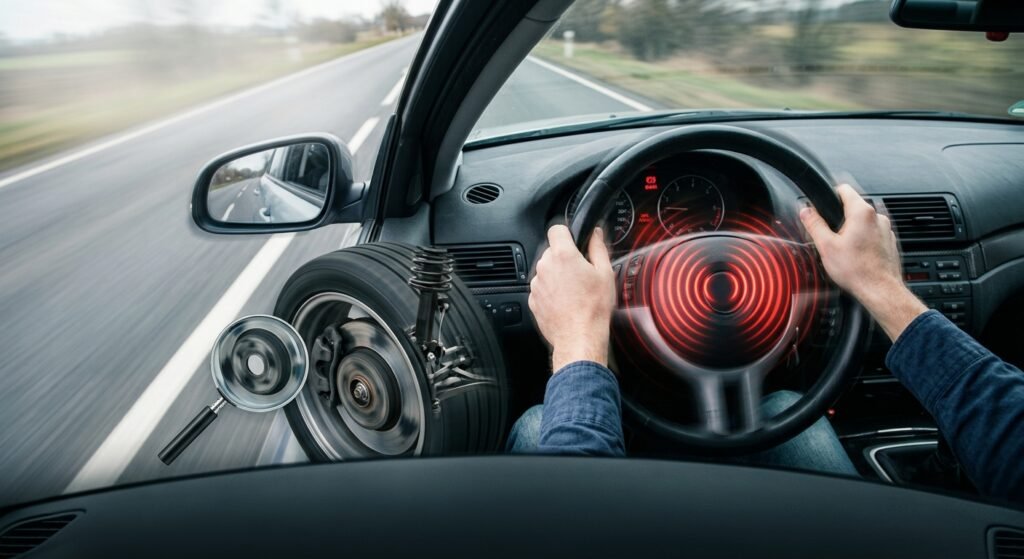
If your car vibrates when braking, the brake system is the first place to investigate, especially when the vibration appears only after you press the brake pedal. Brake rotor thickness variation, rotor runout, uneven pad deposits, sticking callipers, and worn brake components can all cause this type of vibration.
The exact location and timing of the vibration can narrow things down. A pulsing brake pedal points toward a different problem than a steering wheel that shakes only during braking, while vibration that continues when you’re simply cruising may have nothing to do with the brakes.
One common mistake is to assume the rotors are “warped.” True permanent rotor deformation is less common than disc thickness variation (DTV), lateral runout, or uneven friction-material deposits.
What Does It Mean When a Car Vibrates While Braking?
Brake vibration, also called brake shudder or brake judder, occurs when braking forces aren’t consistent as the rotor rotates.
A healthy disc-brake system applies relatively even pressure to the rotor. If the rotor has thickness variation, excessive runout, uneven deposits, or another problem, the contact between the pads and rotor changes as the wheel turns. That variation can be felt through the brake pedal, steering wheel, suspension, or vehicle body.
The location of the vibration provides a useful clue:
- Brake pedal pulsates: brake-system variation is a strong possibility.
- Steering wheel shakes: front brake, hub, steering, or suspension problems are possible.
- Entire vehicle shakes: the brake system or suspension may be involved.
- Vibration exists without braking: investigate wheels, tires, bearings, alignment, and suspension as well.
8 Common Causes of a Car Vibrating When Braking
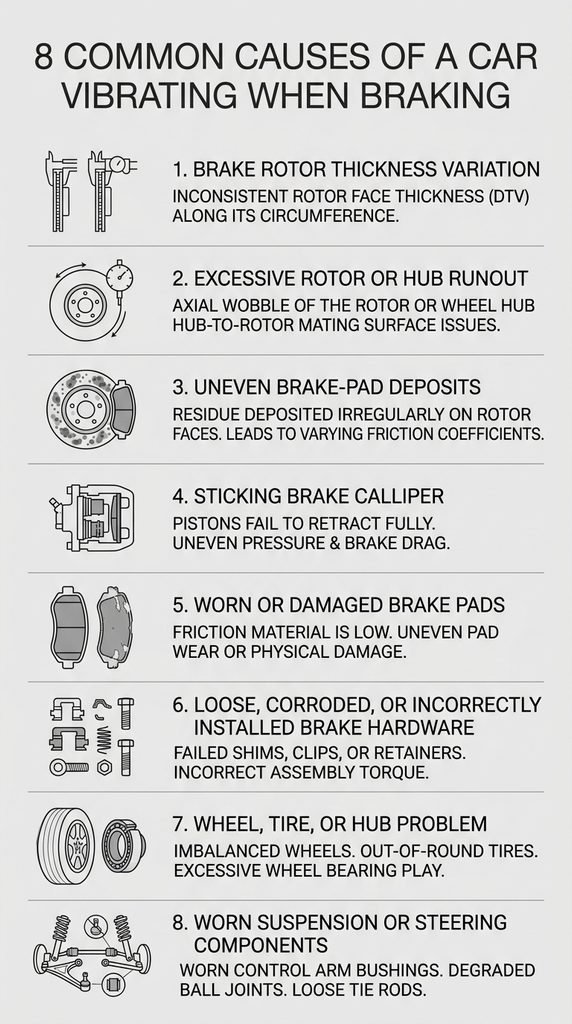
1. Brake Rotor Thickness Variation
This is one of the most common causes of brake vibration.
Disc thickness variation means the rotor isn’t the same thickness at different points around its circumference. As the rotor rotates through the caliper, the changing thickness can alter the position and force of the brake pads.
The result is often a rhythmic brake pedal pulsation or vibration during braking.
Drivers commonly describe this as a “warped rotor.” However, DTV can develop from uneven wear, heat-related problems, runout, or uneven transfer of brake-pad material.
2. Excessive Rotor or Hub Runout
Runout describes side-to-side movement of the rotor as it rotates.
A rotor may have excessive runout because it isn’t sitting correctly against the hub, the hub surface is corroded, the hub itself has excessive runout, or the rotor wasn’t installed correctly.
Even a small amount of rust or debris between the rotor and hub can prevent the two surfaces from mating correctly. Over time, excessive runout can contribute to DTV and brake pulsation.
This is one reason proper cleaning of the hub mounting surface matters during brake service.
3. Uneven Brake-Pad Deposits
Brake pads transfer a small amount of friction material onto the rotor during normal operation. Problems can arise when the material isn’t distributed evenly.
Severe braking, overheating, or poor bedding can produce areas with different friction characteristics. Those high- and low-friction areas can create a vibration that feels much like a warped rotor.
The rotor may not be physically bent at all. Instead, its surface condition has become inconsistent.
4. Sticking Brake Calliper
A brake calliper should apply the brake pads evenly and release them when you let off the pedal.
If the piston or slide mechanism sticks, one pad may remain in contact with the rotor or apply pressure unevenly. This can create excessive heat and uneven rotor wear, eventually producing brake judder.
Other clues include:
- Vehicle pulling while braking
- Uneven pad wear
- Burning smell
- One wheel becoming much hotter than the others
- Brake drag
- Persistent squeaking
Simply replacing the rotors won’t necessarily solve the problem if a sticking calliper caused the original damage.
5. Worn or Damaged Brake Pads
Brake pads that are excessively worn, unevenly worn, contaminated, or damaged can affect braking consistency.
A pad that’s wearing at an angle may not maintain even contact with the rotor. A contaminated pad may also produce inconsistent friction.
However, don’t assume that every brake vibration means you need new pads. Rotor condition, calliper movement, hardware, and mounting surfaces should also be inspected.
6. Loose, Corroded, or Incorrectly Installed Brake Hardware
Brake pads depend on clips, shims, springs, guide pins, and other hardware to remain correctly positioned.
If hardware is damaged, corroded, loose, or incorrectly installed, the pad may move more than intended. That can produce noise, uneven contact, or vibration.
Installation quality also matters. Rust or debris between the rotor and hub can create runout, while incorrect wheel installation can contribute to vibration problems.
7. Wheel, Tire, or Hub Problem
Not every vibration felt during braking originates in the brakes.
A wheel imbalance, bent wheel, damaged tire, worn wheel bearing, or hub problem can produce vibration that becomes more noticeable when you slow down.
The timing is the key clue.
Vibration only while braking: investigate the brake system first.
Vibration at a particular road speed whether braking or not: wheels, tires, hubs, and suspension become stronger suspects.
Worn suspension or steering components can amplify a vibration that may otherwise be relatively minor.
Possible sources include:
- Control-arm bushings
- Ball joints
- Tie rods
- Wheel bearings
- Other steering components
Loose or worn components can allow excessive movement during braking and make the steering wheel or brake pedal shake. Suspension problems can also mimic brake shudder.
Car Vibrates When Braking at High Speed
A vibration that appears when braking from highway speeds is a common brake-judder pattern.
For example, the car may drive smoothly at 60 mph, but when you brake from 60 to 30 mph, the steering wheel begins shaking and the brake pedal starts pulsing.
Possible causes include:
- Rotor thickness variation
- Rotor or hub runout
- Uneven pad deposits
- Sticking caliper
- Brake hardware problems
- Suspension or hub issues
Higher wheel speed means any variation in the brake assembly cycles more quickly, making the vibration easier to notice.
If the vibration becomes severe at higher speeds, don’t continue testing it repeatedly on public roads. A brake inspection is preferable to trying to diagnose the problem through increasingly hard stops.
Steering Wheel Vibrates When Braking
A steering wheel that shakes specifically when you brake often points toward a problem affecting the front brake or front-end assembly.
Potential causes include:
- Front rotor thickness variation
- Front rotor or hub runout
- Front calliper problems
- Worn steering components
- Suspension bushings
- Wheel or hub problems
The steering wheel provides useful information, but it doesn’t identify the exact component.
A useful distinction is:
Steering wheel vibrates only during braking → inspect the brake and front suspension systems.
Steering wheel vibrates while cruising without braking → investigate tyre balance, wheel condition, alignment, wheel bearings, and suspension.
Brake Pedal Pulsates When Braking
A pulsating brake pedal is one of the strongest clues that you’re dealing with brake judder.
When the brake rotor has thickness variation, the changing rotor profile can push the brake pads and calliper piston back and forth as the rotor rotates. This movement can be transmitted through the hydraulic system and felt as a rhythmic pulsation in the pedal.
The sensation is different from normal ABS operation.
During hard braking on a slippery surface, ABS can deliberately pulse brake pressure as it prevents wheel lockup. That’s normal system operation.
A rhythmic pulsation during ordinary braking on dry pavement deserves inspection.
Car Shakes When Braking but Not While Driving
If the car drives smoothly when you’re not using the brakes but starts shaking once you press the brake pedal, brake-related causes should be investigated first.
A simple way to think about the symptom is:
| When the vibration occurs | What to investigate first |
|---|---|
| Only during braking | Brakes, rotors, pads, callipers |
| Only at high speed, even without braking | Wheels, tyres, alignment |
| During braking and normal driving | Brake, wheel, tyre, suspension, or hub |
| Brake pedal pulses | Rotor/DTV/runout or ABS operation |
| Steering wheel shakes during braking | Front brakes, hub, steering, suspension |
| Whole vehicle shakes during braking | Brakes, rear brakes, suspension, or wheel/tire |
This doesn’t eliminate other possibilities, but the braking relationship gives you a useful starting point.
How to Diagnose a Car That Vibrates When Braking
Don’t start by buying new rotors. First establish exactly when and how the vibration occurs.
1. Determine Whether It Happens Only During Braking
Drive normally and pay attention to whether vibration is present without touching the brake pedal.
2. Note the Speed
Does the vibration occur during low-speed braking, highway braking, or both?
A problem that becomes apparent during higher-speed braking can be particularly noticeable with rotor-related issues.
3. Identify Where You Feel It
Note whether the vibration reaches the:
- Steering wheel
- Brake pedal
- Seat
- Floor
- Entire vehicle
4. Check for Brake-Pedal Pulsation
A rhythmic pedal movement is a useful clue toward rotor thickness variation or related brake-system problems.
5. Look for Other Symptoms
Pay attention to:
- Grinding
- Squeaking
- Pulling
- Burning smell
- Excessive heat
- Uneven pad wear
Our article on why your brakes are squeaking covers several of these related warning signs.
6. Inspect the Brake Pads and Rotors
Where a safe visual inspection is possible, look for:
- Uneven pad thickness
- Deep rotor grooves
- Severe corrosion
- Discoloration
- Obvious scoring
- Uneven deposits
A visual inspection can’t measure DTV or runout, so apparently normal rotors can still require further testing.
7. Check Calliper Operation
A sticking piston or guide pin can cause uneven pad pressure and heat.
If one wheel is significantly hotter than the others after driving, don’t simply assume the rotor is defective.
8. Check Rotor Thickness
A micrometre can be used to measure rotor thickness at multiple points. The measurements should be compared against the minimum thickness and other specifications provided by the vehicle manufacturer.
9. Measure Runout Where Appropriate
A dial indicator can measure lateral rotor runout.
Again, compare the result with the manufacturer’s specification rather than relying on a generic tolerance.
10. Inspect Wheels and Suspension if the Brakes Check Out
If the brake system is within specification, move to the wheel, tyre, hub, steering, and suspension components.
This prevents a brake problem from being incorrectly diagnosed when the real source is elsewhere.
Can Brake Rotors Cause the Whole Car to Shake?
Yes.
Severe brake judder can be transmitted through the calliper, suspension, steering system, and vehicle body. You might feel it primarily through the brake pedal or steering wheel, or you may feel the entire vehicle shake.
However, whole-car vibration doesn’t automatically mean the rotors are bad.
Rear brake problems, suspension wear, wheel issues, tire problems, and hubs can also create vibration. The fact that it happens specifically during braking is what makes the brake system the first area to investigate.
Can a Bad Calliper Cause Vibration When Braking?
Yes.
A sticking calliper can hold a brake pad against the rotor or apply pressure unevenly. The resulting heat and uneven wear can produce rotor thickness variation and brake shudder.
The sequence can look like this:
Sticking calliper → uneven pad pressure → excess heat → uneven rotor wear → brake vibration.
This is why replacing a rotor without addressing the calliper can result in the vibration coming back.
Can You Drive With a Car That Vibrates When Braking?
It depends on how severe the vibration is, but persistent braking vibration shouldn’t be ignored.
A mild vibration with completely normal braking performance isn’t necessarily an immediate emergency, but it still deserves inspection.
Stop driving and have the vehicle checked promptly if vibration is accompanied by:
- Reduced braking performance
- Severe brake-pedal pulsation
- Strong steering-wheel shake
- Vehicle pulling
- Grinding
- Burning smell
- One wheel becoming unusually hot
- Brake warning light
Brake shudder can worsen and may increase wear on other brake components.
How to Fix Brake Vibration
There is no universal repair because the correct fix depends on the confirmed cause.
Possible repairs include:
- Replacing worn brake pads
- Replacing damaged rotors
- Resurfacing rotors when permitted by their condition and specifications
- Servicing or replacing sticking calliper components
- Replacing damaged brake hardware
- Cleaning corrosion from the hub and rotor mating surfaces
- Correcting rotor or wheel installation
- Repairing worn suspension or steering components
Rotor resurfacing should not be performed simply because a customer reports vibration. The rotor must have enough material to remain above the manufacturer’s minimum thickness after machining, and its condition must make resurfacing appropriate.
Likewise, replacing the rotors without fixing excessive runout or a sticking calliper can allow the vibration to return.
How to Prevent Brake Vibration
Proper brake installation and maintenance can reduce the likelihood of judder.
When replacing brake components:
- Clean the hub and rotor mating surfaces.
- Follow the manufacturer’s installation procedure.
- Use the correct wheel/lug torque.
- Bed new pads and rotors correctly.
- Inspect calliper pistons and guide mechanisms.
- Replace worn brake hardware where necessary.
- Don’t ignore brake drag or overheating.
Rust or debris between the hub and rotor can contribute to runout, while improper bedding can contribute to uneven friction-material transfer.
Avoid repeated unnecessary heavy braking, and investigate unusual vibration early rather than waiting until braking becomes noticeably worse.
FAQ
Why does my car vibrate when braking?
Common causes include brake rotor thickness variation, rotor or hub runout, uneven brake-pad deposits, sticking callipers, worn brake pads, damaged hardware, and suspension or steering problems.
Why does my car shake when braking at high speed?
Higher-speed braking can make rotor-related vibration more noticeable. Rotor thickness variation, runout, uneven pad deposits, calliper problems, and suspension issues are possible causes.
Why does my steering wheel shake when I brake?
Steering-wheel vibration during braking can be associated with front rotor variation or runout, but worn suspension, steering, hub, and wheel components can also contribute.
Why does my brake pedal pulsate?
A rhythmic brake-pedal pulsation can occur when the brake rotor has thickness variation or excessive runout. The changing rotor profile moves the pads and calliper piston as the rotor turns.
Can warped rotors cause vibration?
Yes, but “warped rotors” is often used as a broad term for several conditions. Disc thickness variation, lateral runout, and uneven friction-material deposits are common technical explanations for the vibration drivers describe as warped rotors.
Can bad brake pads cause vibration?
Yes. Worn, damaged, unevenly worn, or contaminated pads can contribute to inconsistent braking and vibration. However, pads are only one possible cause.
Can a bad calliper cause vibration?
Yes. A sticking calliper can create uneven pad pressure and excessive heat, which can lead to uneven rotor wear and brake judder.
Can suspension problems cause vibration when braking?
Yes. Worn suspension or steering components can allow excessive movement under braking and amplify or mimic brake vibration.
Why does my car vibrate only when braking?
When vibration appears specifically while braking, brake rotors, pads, callipers, brake hardware, and hubs should be investigated first. If the vehicle vibrates at the same speed without braking, wheels, tyres, suspension, and alignment become more likely causes.
Can I drive with brake vibration?
Mild vibration with normal braking may not indicate an immediate emergency, but persistent vibration should be inspected. Severe shaking, reduced braking performance, pulling, grinding, burning smells, overheating, or a brake warning light require prompt attention.
Do I need new rotors if my car vibrates when braking?
Not necessarily. The vibration may come from rotor thickness variation, runout, uneven pad deposits, a sticking calliper, brake hardware, or suspension components. Rotor condition and measurements should be checked before deciding whether resurfacing or replacement is necessary.