
If you’re wondering why your brakes are squeaking, the answer isn’t always worn brake pads. Moisture, surface rust, brake-pad material, dust, glazing, loose hardware, and calliper problems can all create brake noise. Some causes disappear after a few normal stops, while others mean the brakes need inspection.
The timing of the noise is one of the most useful clues. A brief squeak after rain is very different from a high-pitched squeal every time you press the brake pedal or a grinding noise that continues while driving.
Why Do Brakes Squeak?
Disc brakes work by pressing brake pads against a rotating brake rotor. The resulting friction slows the wheel, but it can also create vibration between the pad, rotor, and associated hardware.
When that vibration falls within an audible frequency, you hear it as a squeak or squeal. The exact sound can depend on the brake-pad material, rotor condition, temperature, moisture, hardware, and calliper movement.
That means brake noise by itself doesn’t identify the failed component.
The useful questions are:
- Does the noise happen only when braking?
- Does it happen only when the brakes are cold?
- Does it disappear after several stops?
- Is it getting louder?
- Do the brakes still feel normal?
- Is there grinding, vibration, pulling, heat, or a burning smell?
8 Common Causes of Squeaky Brakes
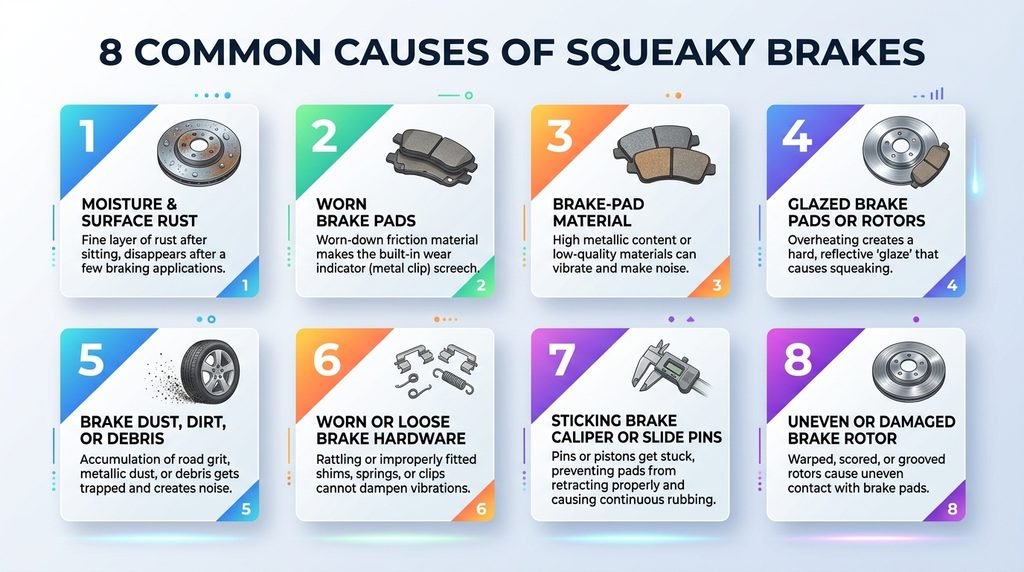
1. Moisture and Surface Rust
One of the least concerning causes is moisture.
After rain, washing the car, snow, or overnight humidity, a thin layer of surface rust can form on the exposed brake rotors. The first few applications of the brakes remove that layer, and the process can produce squeaking or a rough rubbing sound.
If the noise disappears after several normal stops and the brakes otherwise perform normally, moisture or light surface rust is a likely explanation.
This is especially common when the vehicle has been parked overnight.
Long periods of inactivity are different. Significant corrosion can develop when a vehicle sits unused for weeks, potentially damaging the rotor surface rather than producing only temporary noise.
2. Worn Brake Pads
Worn brake pads are another common reason for a persistent high-pitched squeal.
Many brake pads use a mechanical wear indicator. As the friction material becomes thin, the indicator can contact the rotor and produce an audible squeal to warn the driver that the pads need attention.
A continuous squeal while driving or a noise that occurs consistently during braking should therefore prompt a brake inspection.
Don’t rely on sound alone, though. Brake-pad thickness should be checked visually where possible, including the inner and outer pads because they don’t always wear evenly.
3. Brake-Pad Material
Different brake pads can produce different amounts of noise.
The friction material used in a pad affects its behaviour against the rotor. Some compounds are more prone to squeaking, particularly during light braking or when the brakes are cold. Semi-metallic pads, for example, can be noisier than some ceramic or organic formulations.
That doesn’t mean a noisy pad is necessarily defective.
If the pads have sufficient thickness, the rotors are in good condition, the hardware is correctly installed, and braking performance is normal, some occasional squeaking can simply be a characteristic of the friction material.
4. Glazed Brake Pads or Rotors
Excessive heat can change the surface of brake pads and rotors.
A glazed friction surface becomes unusually smooth and can encourage the pad to vibrate against the rotor rather than maintain consistent friction. This can produce persistent squeaking and may also affect braking performance.
Glazing can develop after:
- Repeated heavy braking
- Aggressive braking during break-in
- Long downhill driving
- Brake overheating
- Incorrect bedding of new brake components
If squeaking is accompanied by reduced braking effectiveness, don’t assume the noise is harmless.
5. Brake Dust, Dirt, or Debris
Brake components are exposed to road contamination every time you drive.
Brake dust, sand, grit, small stones, road salt, and other debris can become trapped around the pad and rotor or contaminate the friction surfaces. This can produce squeaking, scraping, or other unusual sounds.
A small piece of debris can sometimes work its way out naturally, but persistent noise deserves inspection.
Don’t spray household cleaners, lubricants, or random chemicals onto the braking surfaces. Brake rotors and friction material need to remain clean and free of inappropriate substances.
6. Worn or Loose Brake Hardware
Brake pads don’t simply sit inside the calliper. They are supported by clips, shims, springs, and other hardware designed to keep them correctly positioned.
Corroded, worn, loose, or incorrectly installed hardware can allow excessive pad movement and vibration, producing squeaking.
This is particularly worth checking if the noise appeared shortly after a brake job.
Replacing brake pads while leaving damaged hardware in place can allow the noise to continue.
7. Sticking Brake Calliper or Slide Pins
A brake calliper needs to apply the pads and then release them correctly.
If a calliper piston or slide mechanism becomes restricted by corrosion, contamination, or inadequate lubrication, the brake pad may remain partially against the rotor after you release the brake pedal.
This can cause:
- Persistent squeaking
- Uneven pad wear
- Excessive heat
- Burning smell
- One wheel becoming significantly hotter than the others
- Brake drag
- Reduced braking performance
A sticking calliper is more concerning than temporary moisture-related noise because continued friction can damage pads, rotors, and other components.
8. Uneven or Damaged Brake Rotor
Rotor condition also affects brake noise.
Deep grooves, corrosion, uneven wear, surface deposits, or variations in rotor thickness can prevent the brake pad from making consistent contact with the rotor. That can create vibration and squeaking.
Drivers often describe these issues as a “warped rotor,” but that term is used too broadly. Different forms of rotor surface variation can produce similar symptoms.
If the noise is accompanied by a vibration through the brake pedal or steering wheel, the rotors deserve closer inspection.
Why Do My Brakes Squeak Only in the Morning?
Morning brake squeaking is often caused by overnight moisture and a thin layer of surface rust.
The rotor is exposed to humidity while the vehicle is parked, and the first few applications of the brakes scrape away the surface contamination. This can create a temporary squeal.
If the noise disappears after several stops and doesn’t return during the rest of the drive, it’s generally less concerning.
A squeak that happens every morning and continues throughout the drive is different. Persistent noise should be inspected for worn pads, hardware, calliper problems, rotor condition, or other causes.
Why Do My Brakes Squeak When Braking Slowly?
Low-speed braking can make brake squeal particularly noticeable.
When you apply light brake pressure, the pad can vibrate against the rotor under conditions that produce an audible high-frequency noise. The result can be a squeak that doesn’t occur during harder braking.
Possible causes include:
- Brake-pad material
- Surface glazing
- Dust or debris
- Brake hardware
- Caliper movement
- Rotor surface condition
- Wear indicators
A low-speed squeak doesn’t automatically mean the brakes are unsafe. Look at the complete symptom pattern rather than the volume of the noise alone.
Why Are My New Brakes Squeaking?
New brake pads and rotors can make noise during the initial bedding-in period.
The friction surfaces need to establish proper contact, and a recently installed brake system can produce temporary squeaking during the first few applications. Improper bedding, contamination, unsuitable pad material, an uneven rotor surface, or installation issues can also create noise.
The important distinction is temporary versus persistent.
If the squeaking disappears after the brakes have been used normally, there may be nothing wrong.
If brand-new brakes continue to squeak regularly, especially when braking performance feels different, have the installation and components inspected. Check the pads, rotors, clips, shims, calliper movement, and contact points before assuming the noise is simply part of the break-in process.
Squeaking vs. Grinding: What’s the Difference?
Squeaking and grinding aren’t equivalent.
Squeaking
A squeak or high-pitched squeal can result from:
- Moisture
- Surface rust
- Brake-pad material
- Wear indicators
- Glazing
- Dust
- Hardware
- Caliper movement
Some of these causes are minor, while others require service.
Grinding
Grinding is much more concerning.
A harsh grinding sound can occur when brake-pad friction material has been completely worn away and the metal backing plate contacts the rotor. This metal-to-metal contact can rapidly damage the rotor and may significantly increase repair costs.
Don’t continue normal driving with grinding brakes. Have the braking system inspected as soon as possible.
When Should You Worry About Squeaky Brakes?
Not every squeak requires immediate repair, but persistent brake noise shouldn’t be dismissed.
Usually less concerning
A noise is generally less alarming when:
- It appears after rain or washing the car.
- It occurs after the vehicle sits overnight.
- It disappears after a few brake applications.
- Braking performance feels completely normal.
- There are no unusual smells, vibrations, or pulling.
Inspection recommended
Arrange a brake inspection when:
- The squeaking occurs during most braking events.
- The noise is becoming louder.
- A new squeak appeared after brake work.
- Pads appear unevenly worn.
- The noise continues while you’re driving.
More urgent
Seek prompt inspection when squeaking is accompanied by:
- Grinding
- Reduced braking performance
- Strong vibration
- Vehicle pulling while braking
- Burning smell
- One wheel becoming unusually hot
- Brake warning light
- Persistent brake drag
Persistent squeaking can indicate worn or loose components, and allowing a mechanical problem to continue can damage more expensive parts of the brake system.
How to Diagnose Squeaky Brakes
Start by identifying exactly when the noise occurs.
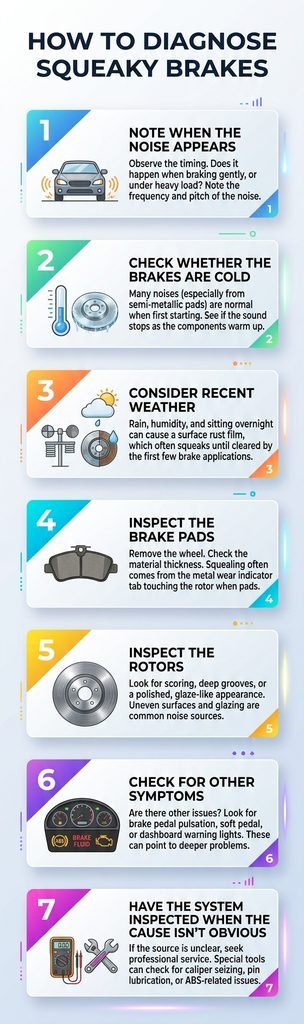
1. Note when the noise appears
Does it happen only during braking, or can you hear it while driving without touching the pedal?
A squeak that continues while driving can point toward a dragging pad, sticking calliper, or another rotating component.
2. Check whether the brakes are cold
Notice whether the noise disappears once the brakes warm up.
A morning-only squeak is more consistent with moisture or surface rust than a noise that continues throughout the day.
3. Consider recent weather
Rain, snow, washing, and high humidity can all contribute to temporary brake noise.
4. Inspect the brake pads
If the design allows a safe visual inspection, check pad thickness and look for uneven wear.
5. Inspect the rotors
Look for severe grooves, corrosion, obvious scoring, or uneven surface wear.
6. Check for other symptoms
Pay attention to:
- Pulling
- Brake vibration
- Burning smell
- Heat from one wheel
- Reduced braking performance
- Grinding
These clues can make a mechanical problem much more likely.
7. Have the system inspected when the cause isn’t obvious
Brake systems are safety-critical. If you can’t identify the cause or you’re not comfortable inspecting brake components, professional diagnosis is the appropriate next step.
Brake noise can also be related to the condition and maintenance of the hydraulic system, so don’t overlook the broader braking system. Our guide explains how often you should change brake fluid.
How Can You Stop Brakes From Squeaking?
There isn’t one universal fix because the correct solution depends on the cause.
Possible repairs include:
- Removing contamination or debris
- Replacing worn brake pads
- Replacing damaged pad hardware
- Servicing calliper slide mechanisms
- Correcting installation problems
- Addressing a sticking calliper
- Replacing severely worn or damaged rotors
- Correctly bedding new pads and rotors
The brake pad and rotor friction surfaces should remain free of grease and inappropriate lubricants. Lubrication belongs only on the specific components and contact points where the brake manufacturer or service procedure calls for it.
Replacing parts without identifying the source of the noise can waste money and leave the original problem unresolved.
Can You Drive With Squeaky Brakes?
It depends on the cause.
A brief squeak after rain or overnight parking, followed by completely normal braking, is generally less concerning.
Persistent squeaking should be inspected, especially if you don’t know how much brake-pad material remains.
Don’t continue driving normally when squeaking is accompanied by:
- Grinding
- Reduced braking ability
- Severe vibration
- Pulling
- Burning smell
- Excessive heat
- Brake warning lights
A brake that is dragging or overheating can deteriorate quickly, while a worn pad can eventually damage the rotor if ignored.
How to Prevent Brake Squeaking
Using appropriate brake components and installing them correctly goes a long way toward reducing brake noise.
During brake service, make sure the pads, rotors, clips, shims, and calliper mechanisms are inspected rather than replacing only the most obviously worn component.
Proper bedding of new brake pads and rotors can also help establish consistent friction surfaces. Keeping the braking system free from contamination and addressing calliper or hardware problems early reduces the chance of persistent noise.
Regular brake inspections are particularly useful because you can identify worn pads, uneven wear, damaged rotors, and sticking components before they develop into more expensive problems.
FAQ
Why are my brakes squeaking?
Common causes include moisture and surface rust, worn brake pads, brake-pad material, glazing, dust or debris, damaged hardware, sticking callipers, and uneven or damaged rotors.
Why do my brakes squeak in the morning?
Overnight moisture can form a thin layer of surface rust on the brake rotors. The first few brake applications can create squeaking while that layer is removed. If the noise disappears quickly, this is usually less concerning.
Why do my brakes squeak when braking slowly?
Light brake pressure can create conditions that allow the brake pad to vibrate against the rotor. Pad material, glazing, dust, hardware, calliper movement, and rotor condition can all contribute to low-speed squeaking.
Why are my new brakes squeaking?
New pads and rotors can sometimes produce temporary noise while the friction surfaces bed in. Persistent noise can indicate contamination, incorrect installation, unsuitable components, hardware problems, glazing, or an uneven rotor surface.
Does brake squeaking mean I need new pads?
Not necessarily. Squeaking can be caused by moisture, pad material, brake hardware, glazing, debris, or caliper problems. However, persistent high-pitched squealing can be produced by a brake-pad wear indicator, so pad thickness should be checked.
Can rain cause brakes to squeak?
Yes. Moisture can lead to a thin layer of surface rust on exposed brake rotors. The first few brake applications can produce temporary squeaking until the surface is cleaned by normal braking.
Can brake dust cause squeaking?
Yes. Brake dust, road grit, sand, salt, and other debris can become trapped between brake components or contaminate the friction surfaces and create noise.
Can a bad calliper cause squeaking?
Yes. A sticking piston or restricted slide mechanism can keep a brake pad partially against the rotor, producing squeaking along with heat, uneven wear, or a burning smell.
Is it safe to drive with squeaky brakes?
A brief squeak caused by moisture may not indicate a serious fault when braking performance is completely normal. Persistent squeaking should be investigated, and squeaking accompanied by grinding, poor braking, severe vibration, pulling, overheating, or a warning light requires prompt attention.
What’s the difference between squeaking and grinding brakes?
Squeaking can have several relatively minor causes, including moisture, pad material, and surface vibration. Grinding is much more serious because it can indicate metal-to-metal contact after brake-pad friction material has worn away.



3 Comments