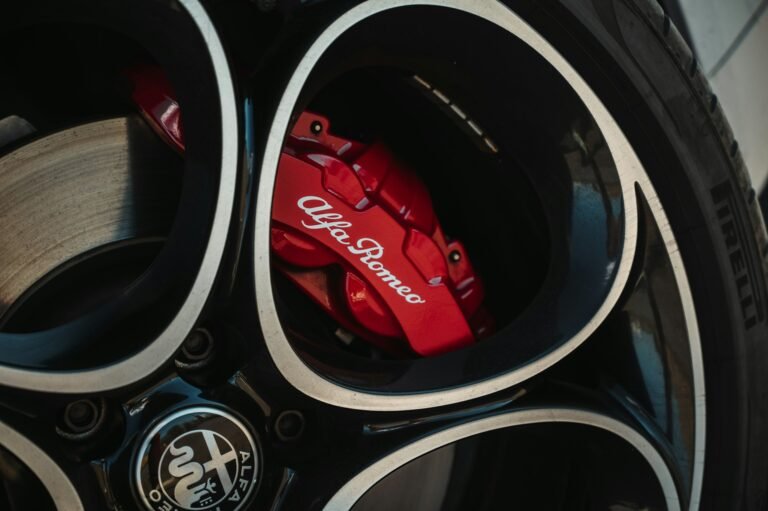
A squeal when you brake can make you wonder whether your brake pads are finally worn out. Grinding, a vibrating pedal, pulling to one side, or a brake warning light can raise the same concern.
But there is an important distinction: a brake symptom does not always identify the component causing it. Squeaking, for example, can come from moisture or brake dust rather than worn pads. Likewise, vibration can involve the rotors or caliper.
To figure out whether your brake pads actually need replacing, TemporaryHipster recommends looking beyond a single symptom. A combination of brake behavior, visual inspection, and the remaining friction-material thickness gives you a much clearer picture of their condition.
How Do Brake Pads Work and Why Do They Wear?
When you press the brake pedal, hydraulic pressure moves the caliper, which presses the brake pads against the rotor. Friction between the pads and rotor slows the wheel and brings the vehicle to a stop.
Over time, that friction wears down the pad’s friction material.
Brake pedal → hydraulic pressure → caliper → brake pads → rotor → friction → vehicle slows
Because driving conditions vary significantly, mileage alone is not a reliable way to determine when pads need replacement. Actual pad thickness and condition are more useful indicators than the odometer.
7 Signs Your Brake Pads Are Worn
1. Squealing or Squeaking When You Brake
A high-pitched squeal is one of the most recognizable signs associated with brake pads. Some pads have a mechanical wear indicator designed to contact the rotor and produce a noticeable sound when the friction material becomes thin.
However, not every brake squeal means the pads are worn.
Other possible causes include:
- Moisture on the braking components
- Light surface rust
- Brake dust or debris
- The characteristics of the pad material
- Pad vibration or resonance
- Installation-related issues
So, do brake pads always squeak when they need replacing?
No.
Some vehicles use mechanical wear indicators, while others use electronic sensors. Some brake pads may become significantly worn without producing an obvious noise at all.
If the squealing is new or persistent, inspect the brakes rather than assuming the pads are automatically at fault.
2. Grinding or Scraping Sounds
Grinding is more concerning than an occasional squeal.
A harsh grinding or scraping sound can indicate that the friction material has become severely worn and that metal components are contacting the rotor. It can also have other causes, but it should not be treated as normal brake noise.
Continued metal-on-metal contact can result in:
- Rotor damage
- Reduced braking performance
- Additional heat
- More expensive repairs
If your brakes have started grinding, don’t assume you can safely drive for a few more days. There is no universal amount of remaining driving time that can be considered safe.
Grinding brakes should be inspected as soon as possible rather than treated as a maintenance issue that can wait.
3. Your Car Takes Longer to Stop
A noticeable change in stopping performance is a serious warning sign.
Worn friction material can contribute to braking problems, but it is not the only possible explanation. Other causes can include:
- Glazed brake pads
- Overheated brakes
- Contaminated friction material
- A sticking or malfunctioning calliper
- Hydraulic brake-system problems
- Tire-related issues
This is why longer stopping distance should not automatically be diagnosed as worn brake pads.
The symptom requires investigation, but it does not identify the failed component by itself.
If the vehicle no longer brakes with the same confidence or requires noticeably more pedal input or distance to stop, prioritise inspection over continued diagnosis through normal driving.
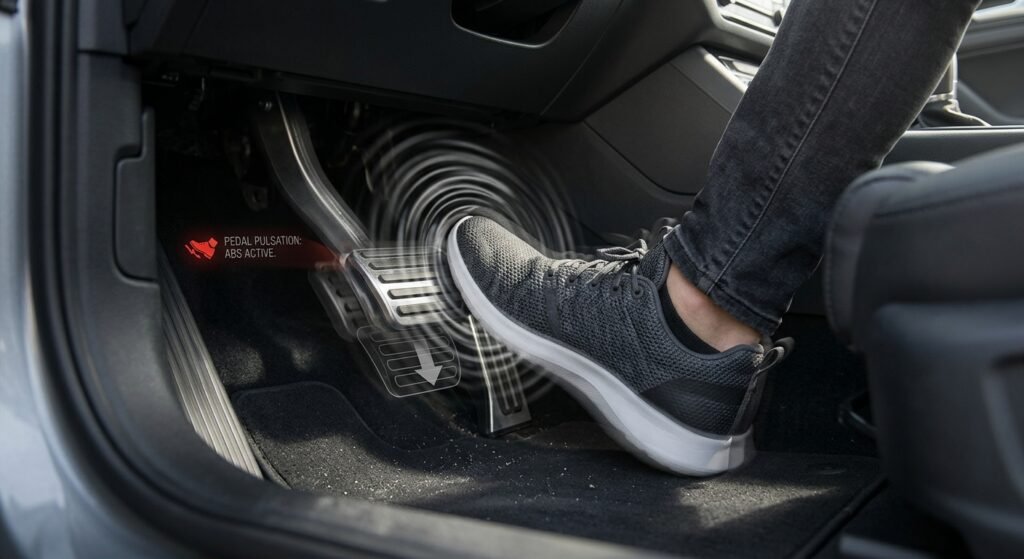
4. The Brake Pedal Vibrates or Pulsates
A brake pedal that pulses under braking can indicate a problem with the braking assembly, but it does not automatically mean the pads are worn.
Possible causes include:
- Uneven brake-pad wear
- Uneven friction-material deposits on the rotor
- Rotor runout
- Overheated or damaged rotors
- A sticking calliper
The sensation can sometimes be accompanied by steering-wheel vibration, particularly during harder braking.
This is also where the common question “Do I need brake pads, rotors, or both?” comes in.
The answer depends on what an inspection finds. The pads, rotors and callipers should be evaluated together before deciding which components actually need replacement.
5. The Car Pulls to One Side When Braking
If your car pulls left or right when you apply the brakes, uneven braking force could be involved.
Potential brake-related causes include:
- Uneven brake-pad wear
- A sticking calliper
- A seized caliper slide pin
- Uneven hydraulic pressure
- Contaminated friction material
However, the brakes are not the only possible source.
Tire problems, wheel alignment and suspension components can also cause a vehicle to pull. If the car consistently moves to one side during braking, don’t automatically assume the brake pads are responsible.
The symptom is a reason to inspect the vehicle, not a diagnosis by itself.
6. You See Very Little Friction Material Left
A visual inspection can provide much stronger evidence of brake-pad wear than noise alone.
On some vehicles, you can see part of the brake pad through the wheel spokes. When the vehicle design allows it, look at the remaining friction material and check for:
- Very little material remaining
- Cracks or physical damage
- Contamination
- Severe uneven wear
There is no single thickness limit that applies to every vehicle. Always use the vehicle manufacturer’s specifications or applicable service information as the final reference.
As a general practical guide, around 4 mm of remaining friction material or less is a point at which replacement should generally be planned, while around 3 mm or less makes replacement more urgent. These are not universal safety thresholds.
Uneven wear also deserves attention. Compare the left and right sides and, where possible, the inner and outer pads. One pad can be substantially thinner than another because of a calliper or slide-pin problem.
| What you find | What it may indicate | What to do |
| Plenty of material, even wear | Normal condition | Continue routine inspections |
| Around 4 mm or less | Pad wear approaching replacement | Plan an inspection/replacement |
| Around 3 mm or less | Significant wear | Arrange replacement promptly |
| Cracked or contaminated pad | Damaged friction material | Have the brake assembly inspected |
| Metal-on-metal contact | Severe pad wear | Stop treating it as routine maintenance |
Don’t remove wheels or dismantle brake components unless you have the appropriate tools, knowledge and safe working setup.
7. The Brake Warning Light or Pad-Wear Message Comes On
Modern vehicles can use different systems to alert drivers about brake problems.
Depending on the vehicle, you may encounter:
- Electronic brake-pad wear sensors
- Mechanical pad-wear indicators
- General brake-system warning lights
- Dashboard messages specifically referring to brake-pad wear
These warnings should not all be interpreted in the same way.

A general brake warning light can indicate problems such as low brake fluid, hydraulic-system faults or other brake-system issues. An ABS warning can point to an ABS-related fault rather than worn pads.
A warning light does not automatically mean “the brake pads are worn.”
The reverse is also true: no warning light does not guarantee healthy brake pads. A vehicle may have no electronic pad sensor, or the pads may simply be worn without triggering a warning.
If a warning appears alongside poor braking, an unusual pedal feel, grinding or another significant symptom, treat the situation as a priority.
How Do You Know If Brake Pads Actually Need Replacing?
Some findings provide much stronger evidence of pad wear than others.
Strong evidence of pad wear
- Friction material is below the manufacturer’s specification
- An active pad-wear indicator is present
- The friction material is severely worn
- A pad is cracked or contaminated
- Metal-to-metal contact has occurred
- There is severe uneven pad wear
Symptoms that require inspection but don’t prove pad wear
- Squealing
- Vibration
- Pulling while braking
- A warning light
- Changes in pedal feel
- Changes in braking performance
The distinction matters because replacing brake pads without identifying the underlying problem may not fix the symptom.
The symptom tells you that something may be wrong; inspection determines what actually needs repair.
How Long Do Brake Pads Usually Last?
There is no reliable single mileage figure for every vehicle.
Brake-pad life depends on factors such as:
- Driving style
- City versus highway driving
- Stop-and-go traffic
- Hills and mountainous roads
- Vehicle weight
- Towing
- Brake-pad material
- Climate and road conditions
- Regenerative braking in hybrids and EVs
A driver who spends most of the week in heavy city traffic can use brake material much faster than someone who primarily drives on highways.
Mileage can therefore provide context, but it should not determine replacement by itself.
Actual pad thickness and condition matter more than the odometer.
Can You Drive With Worn Brake Pads?
That depends on how worn the pads are and what other symptoms are present.
Squeaking with otherwise normal braking:
The noise does not automatically mean the pads are dangerously worn, but the brakes should be inspected and replacement planned if necessary.
Very thin pads:
Replacement should be arranged promptly rather than waiting for a more severe symptom.
Grinding, major vibration, pulling or reduced braking:
Treat these as urgent safety issues. Continued driving may cause additional damage or compromise braking performance.
Brake warning light combined with unusual pedal feel or poor braking:
Stop normal driving and obtain a professional brake inspection.
No fixed number of miles can be considered universally safe with worn brake pads. Brake condition, vehicle design and the severity of the problem all matter.
Do You Replace Brake Pads or Rotors?
Not every brake-pad replacement requires new rotors.
Pads alone may be sufficient when the rotor:
- Remains above its minimum thickness
- Has an acceptable braking surface
- Has no significant scoring
- Has not suffered serious heat damage
- Meets the applicable manufacturer or service specifications for reuse
Pads and rotors may both need replacement when the rotor is:
- Deeply scored
- Below minimum thickness
- Severely heat-damaged
- Significantly corroded on the braking surface
- Damaged by metal-on-metal contact
The condition of the rotor should be assessed before deciding.
Should Brake Pads Be Replaced in Pairs?
Brake pads on the same axle should normally be replaced as a set.
For example, if the front pads require replacement, both front pads should normally be replaced rather than replacing only the left or right pad.
Replacing only one side can create uneven braking characteristics and leave you with mismatched pad condition.
That does not mean all four pads must be replaced simultaneously. Front and rear brakes can wear at different rates, so each axle should be assessed independently.
How to Check Brake Pad Wear at Home
A basic visual inspection can sometimes tell you whether the pads are approaching the end of their service life.
When the vehicle’s design permits inspection through the wheel spokes:
- Look for the friction material between the calliper and rotor.
- Check how much material remains.
- Compare the left and right sides.
- Look for uneven wear between inner and outer pads when visible.
- Check for cracks, contamination or obvious physical damage.
Removing the wheel can provide a better view, but only if you have the correct equipment and know how to work safely.
Never work underneath a vehicle supported only by a jack.
Brake inspection is reasonable for a competent DIY owner, but brake-system repairs are safety-critical. If you cannot confidently identify the condition of the pads, rotors or callipers, have the vehicle inspected by a qualified professional.
Frequently Asked Questions
Do brake pads always squeak when they need replacing?
No. Some pads use mechanical wear indicators, while others rely on electronic sensors or may provide little audible warning. Squeaking can also result from moisture, rust, dust, debris or pad vibration. No noise does not prove that the pads are healthy.
How many miles do brake pads usually last?
Brake-pad life varies substantially depending on driving style, traffic, vehicle weight, terrain, pad material and other conditions. Mileage is only a rough estimate. Actual pad thickness and condition are more useful for deciding when replacement is necessary.
Can I drive with squeaking brake pads?
Possibly, but the noise should not simply be ignored. Squeaking alone does not confirm severe wear, but it can be a wear indicator or another brake-system issue. Inspect the brakes before assuming the noise is harmless.
Is grinding worse than squeaking?
Generally, yes. Grinding or scraping can indicate severe pad wear and metal-to-metal contact, although it can have other causes. Unlike a normal intermittent squeal, grinding should be treated as a potentially serious brake problem and inspected promptly.
Do I need new brake pads if my steering wheel shakes?
Not necessarily. Brake vibration can involve uneven pad wear or deposits, but rotor runout, damaged rotors and caliper problems can also cause pulsation. The braking assembly should be inspected before replacing components.
Should I replace all four brake pads at once?
Not necessarily. Pads should normally be replaced as a set on the same axle, such as both front pads. Front and rear pads can wear at different rates, so there is no general requirement to replace all four at the same time.
When you’re trying to determine whether your brake pads are worn, the most useful approach is to look beyond a single symptom. Squealing, vibration, pulling and warning lights can tell you that something deserves attention, but pad thickness and a proper inspection provide much stronger evidence of what actually needs repair.