
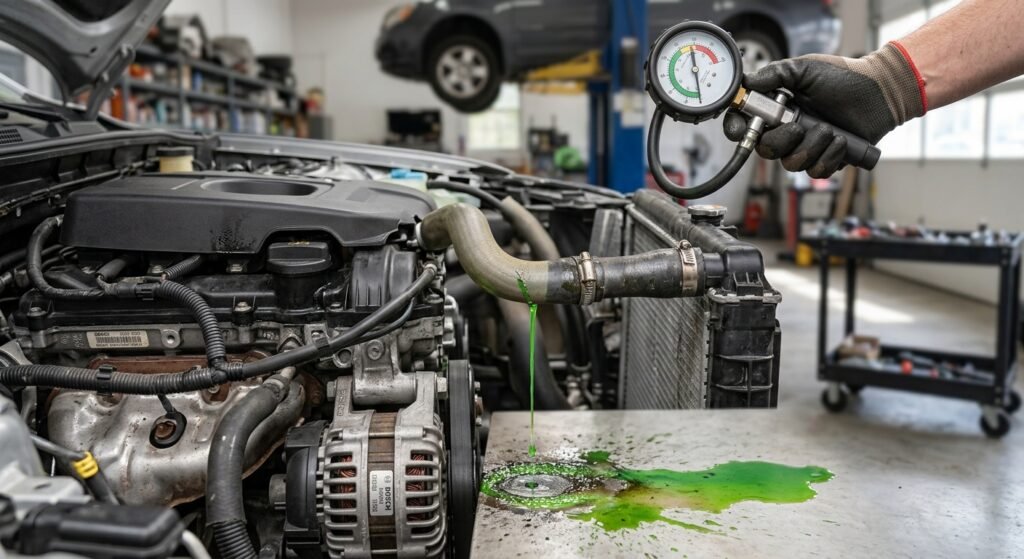
A coolant leak can start as a small wet spot under your car and turn into an overheating engine if you ignore it. Coolant keeps the engine within its normal operating temperature, so losing too much of it can quickly become a serious problem.
Common signs include a sweet coolant smell, a puddle under the vehicle, visible residue around cooling-system components, a dropping coolant level, steam, or an engine temperature that starts running higher than normal.
The good news is that many coolant leaks are relatively easy to locate if you know where to look.
What Does a Coolant Leak Look Like?
Coolant leaks don’t always leave an obvious puddle. A small leak may only appear when the cooling system becomes hot and pressurised, while coolant leaking onto a hot engine component can evaporate before reaching the ground.
Look for these signs:
- A puddle or wet spot underneath the vehicle
- A sweet smell around the engine bay
- Colored or crusty residue near hoses and connections
- A coolant reservoir that keeps losing fluid
- Steam from the engine bay
- An overheating or fluctuating temperature gauge
- Damp carpet inside the vehicle
- Coolant visible around the radiator, water pump, or reservoir
Coolant can come in different colors depending on the formulation, so color alone isn’t a reliable way to identify it. If you’re trying to determine what liquid is underneath your vehicle, see our guide on how to identify the fluid leaking under your car.
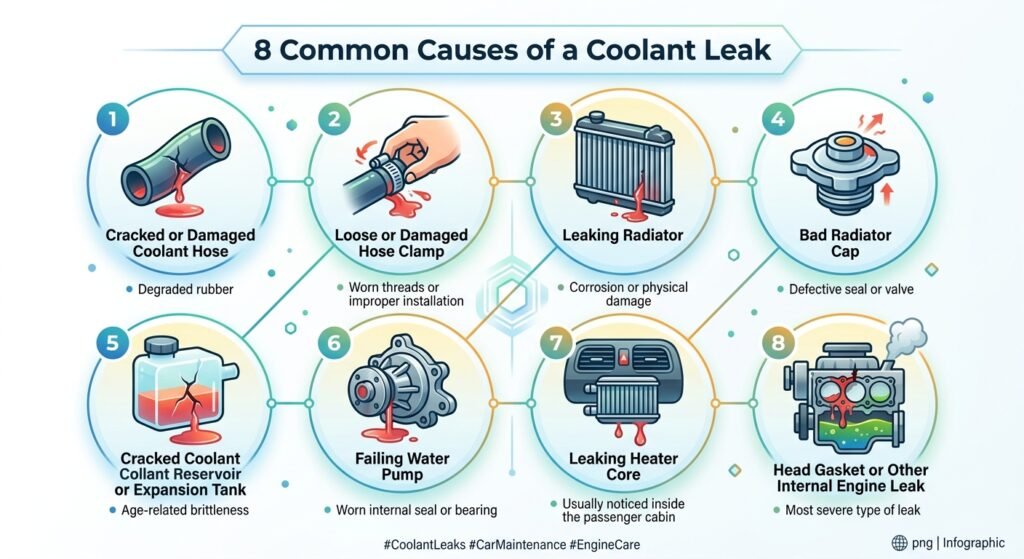
8 Common Causes of a Coolant Leak
A coolant leak can originate from almost any component that contains or transports coolant. These are the most common areas to inspect.
1. Cracked or Damaged Coolant Hose
Rubber coolant hoses are exposed to heat, pressure, and repeated expansion and contraction. Over time, they can become hard, brittle, swollen, or cracked.
A damaged hose may leak around a crack or split. In some cases, the leak only becomes obvious when the engine is hot, and the cooling system is under pressure.
Check the hoses for:
- Cracks or splits
- Bulging sections
- Soft or unusually hard areas
- Wet spots
- Dried coolant residue
Don’t rely on squeezing a hose as a definitive test. A hose can look acceptable externally while deteriorating internally.
2. Loose or Damaged Hose Clamp
Sometimes the hose itself is fine, but coolant is escaping around the connection.
A loose, corroded, or damaged clamp can allow coolant to seep past the hose. Look closely at the areas where hoses connect to the radiator, engine, thermostat housing, and other cooling-system components.
A small amount of dried residue around a connection can be a useful clue, especially if there’s no active dripping.
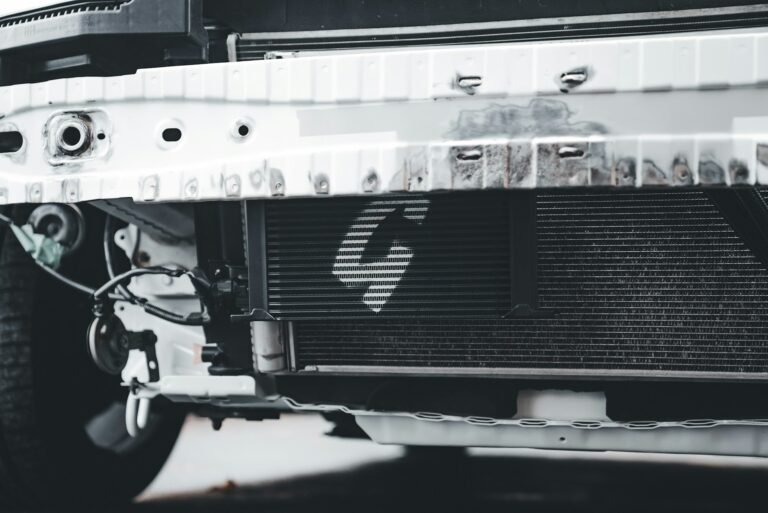
3. Leaking Radiator
The radiator is another common source of coolant loss. Corrosion, physical damage, cracked plastic tanks, or deteriorated seals can eventually create a leak.
Inspect the radiator for:
- Wet areas
- Coolant residue around the seams
- Cracks in plastic components
- Corrosion
- Damage from road debris
A radiator leak can become worse as coolant temperature and system pressure increase, so a leak that’s difficult to see with the engine cold may become obvious after the vehicle has been running.
4. Bad Radiator Cap
The radiator cap or pressurized expansion-tank cap has an important job: maintaining the correct pressure inside the cooling system.
If the cap can’t maintain the required pressure, coolant may escape or boil at a lower temperature than intended. A damaged seal, weak spring, or incorrect replacement cap can cause problems.
Because caps are relatively inexpensive compared with many cooling-system components, they’re worth checking when coolant loss doesn’t have an obvious source.
5. Cracked Coolant Reservoir or Expansion Tank
Many modern vehicles use a plastic expansion tank or coolant reservoir. Repeated heat cycles can eventually cause the plastic to crack.
Inspect the tank carefully, particularly around:
- Seams
- Hose connections
- The cap
- Mounting points
- The bottom of the reservoir
A small crack may only leak when the system is hot and pressurized.
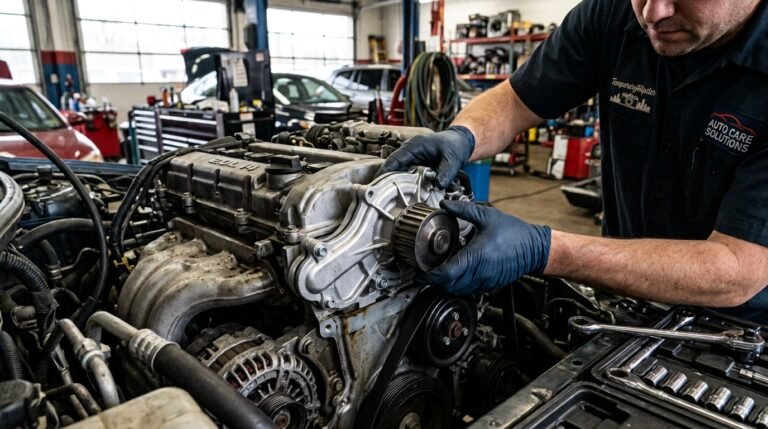
6. Failing Water Pump
The water pump circulates coolant through the engine and cooling system. A failing pump can cause both coolant loss and overheating.
Depending on the design, coolant may escape through the pump’s seal or weep hole. You may also hear grinding, whining, or other unusual noises if the pump bearing is failing.
For a more detailed diagnostic guide, see our article covering the signs of a failing water pump.
7. Leaking Heater Core
The heater core transfers heat from the engine coolant to the air entering the cabin. If it develops a leak, coolant may enter the passenger compartment instead of forming a puddle underneath the vehicle.
Possible signs include:
- Sweet smell inside the cabin
- Fogging or oily film on the windshield
- Damp carpet
- Unexplained coolant loss
- Heater performance problems
A heater-core replacement can be considerably more labour-intensive than replacing a hose or clamp because of its location inside the vehicle.
8. Head Gasket or Other Internal Engine Leak
Not every coolant leak is external.
A failed head gasket or another internal engine problem can allow coolant to enter a combustion chamber, mix with engine oil, or otherwise disappear inside the engine.
Potential warning signs include:
- Persistent white exhaust smoke or steam
- Unexplained coolant loss
- Milky or contaminated engine oil
- Repeated overheating
- Engine misfires
- Bubbles or abnormal pressure in the cooling system
These symptoms can have other causes, so they don’t prove that the head gasket has failed. Proper diagnostic testing is necessary before committing to a major repair.
Signs of a Coolant Leak You Shouldn’t Ignore
A falling coolant level is one of the clearest warning signs.
If you regularly have to add coolant but can’t find an obvious leak, something is wrong. The coolant should remain within the manufacturer’s specified range under normal conditions.
Other warning signs include:
Sweet smell: Coolant often has a distinctive sweet odour, particularly after the engine reaches operating temperature.
Overheating: Low coolant can reduce the cooling system’s ability to remove heat from the engine.
Steam: Steam from the engine bay can indicate coolant contacting a hot component or a serious overheating condition.
Temperature fluctuations: A temperature gauge that moves higher than usual or fluctuates unexpectedly deserves attention.
Visible residue: Dried coolant can leave deposits around the source of a small leak.
Cold air from the heater: A low coolant level can prevent the heater core from receiving enough hot coolant, causing the cabin heater to blow cool air.
If you also notice engine oil problems, don’t assume the two issues are unrelated. Our guide on why your car may be losing oil explains how to distinguish oil-related problems from other fluid losses.
Where Is the Coolant Leak Coming From?
The location of the coolant can give you a starting point, but it doesn’t always identify the exact source.
| Where you notice coolant | Possible sources |
| Front of the engine bay | Radiator, hose, water pump |
| Around a hose connection | Hose or clamp |
| Around the coolant reservoir | Tank, hose, or cap |
| Near the passenger side | Heater core or related components |
| Under the center/front of the engine | Water pump or other cooling-system components |
| No visible puddle | Small external leak, evaporation, or internal leak |
Coolant can travel along engine components before dripping, so the lowest wet point isn’t necessarily where the leak starts.
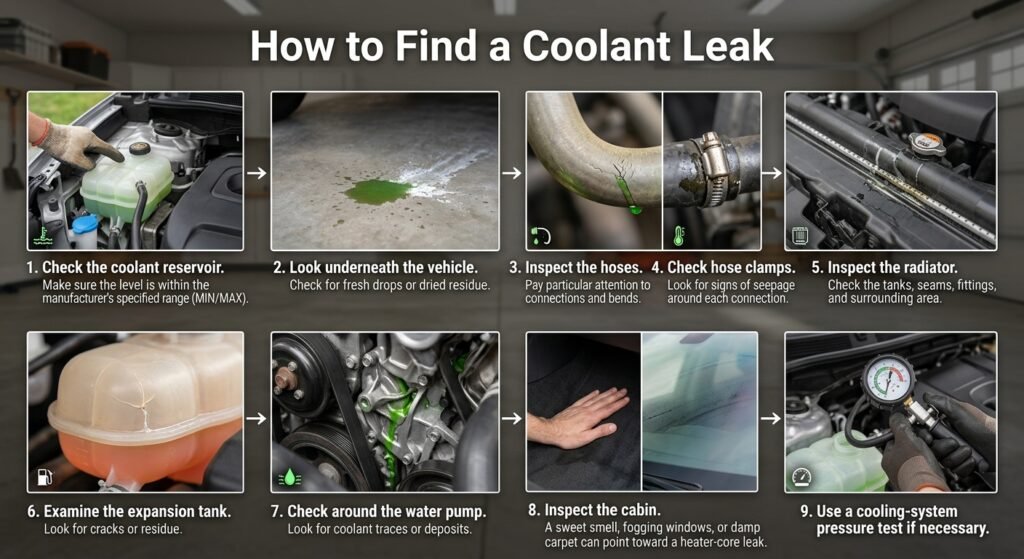
How to Find a Coolant Leak
Start with a cold engine. Never remove a radiator cap or pressurised coolant reservoir cap while the engine is hot. The cooling system can be pressurised, and escaping hot coolant or steam can cause severe burns.
Once the engine is completely cool:
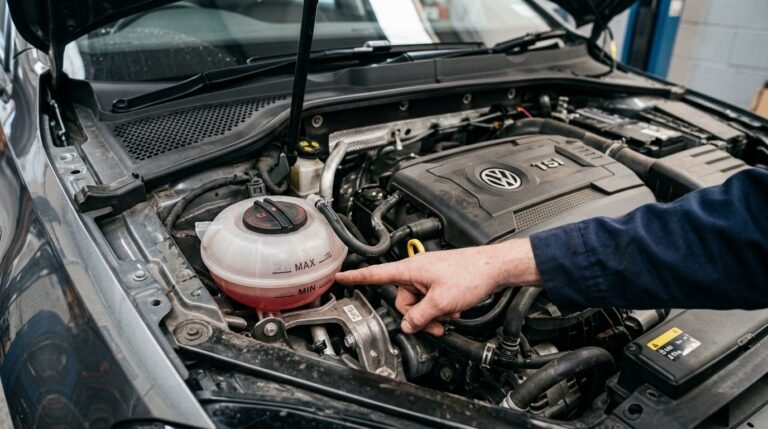
- Check the coolant reservoir. Make sure the level is within the manufacturer’s specified range.
- Look underneath the vehicle. Check for fresh drops or dried residue.
- Inspect the hoses. Pay particular attention to connections and bends.
- Check hose clamps. Look for signs of seepage around each connection.
- Inspect the radiator. Check the tanks, seams, fittings, and surrounding area.
- Examine the expansion tank. Look for cracks or residue.
- Check around the water pump. Look for coolant traces or deposits.
- Inspect the cabin. A sweet smell, fogging windows, or damp carpet can point toward a heater-core leak.
- Use a cooling-system pressure test if necessary.
A pressure test is particularly useful for small or intermittent leaks. It pressurizes the cooling system while the engine is off, making some leaks easier to identify.
If the leak still can’t be found, professional diagnostic testing may be necessary.
What If Your Car Is Losing Coolant but You Can’t See a Leak?
This situation is more common than it might seem.
A small external leak may only occur when the engine is hot. Coolant can also spray onto a hot engine component and evaporate before it reaches the ground.
Other possibilities include:
- A leaking radiator cap
- A cracked reservoir
- A small hose leak
- A water pump leak
- A heater-core leak
- An internal engine leak
- A head-gasket problem
If the coolant level repeatedly drops, don’t treat topping it up as a permanent solution. A cooling-system pressure test can help locate a hidden external leak, while additional testing may be required if an internal leak is suspected.
Can You Drive With a Coolant Leak?
It depends on how severe the leak is, but driving with a known coolant leak is risky.
If the coolant level is dropping quickly, the temperature gauge is rising, or steam is coming from the engine bay, stop driving. Continuing to operate an overheating engine can cause expensive damage.
A very small leak with a stable engine temperature may allow you to drive a short distance to a repair shop, but this isn’t something to ignore for days or weeks.
Adding coolant can temporarily restore the correct level, but it doesn’t repair the leak. If you repeatedly have to top up the system, the vehicle needs to be inspected.
Coolant Leak vs. Water From the A/C
Not every puddle underneath your car means there’s a coolant leak.
Air conditioning systems normally produce condensation. On a warm day, clear water dripping underneath the vehicle after using the A/C is usually normal.
A coolant leak is more likely to involve colored fluid, a sweet smell, or visible residue.
If the liquid is clear and odourless and appears after running the air conditioner, condensation is a more likely explanation. However, if you’re unsure, don’t identify the fluid based on appearance alone.
How Much Does a Coolant Leak Repair Cost?
The repair cost depends almost entirely on which component is leaking.
A failed hose or clamp is usually much cheaper to repair than a water pump, heater core, or head gasket.
Typical repair categories include:
- Hose or clamp: usually a relatively simple repair
- Coolant reservoir: generally straightforward
- Radiator: moderate repair depending on vehicle design
- Water pump: more labour-intensive
- Heater core: potentially labour-intensive because of its location
- Head gasket: major engine repair
Before approving an expensive repair, make sure the actual source of the coolant leak has been confirmed.
How to Prevent Coolant Leaks
You can’t prevent every cooling-system failure, but regular inspection can catch many problems before they become serious.
Check the coolant level periodically, inspect hoses and connections for deterioration, and use the coolant specified by the vehicle manufacturer.
It’s also worth paying attention to gradual changes. If you suddenly need to add coolant between maintenance intervals, don’t assume the system simply “used some.” A recurring drop in coolant level usually indicates a leak or another cooling-system problem.
For a broader maintenance routine, our guide on how to check your car’s fluid levels covers coolant alongside oil, brake fluid, and other fluids.
FAQ
What are the most common causes of a coolant leak?
Common causes include damaged hoses, loose clamps, leaking radiators, faulty radiator caps, cracked expansion tanks, water pump failures, heater-core leaks, and internal engine problems.
How can I tell if my car is leaking coolant?
Look for a sweet smell, coolant residue, wet areas around cooling-system components, a puddle under the vehicle, falling coolant levels, overheating, or steam from the engine bay.
Can a coolant leak cause overheating?
Yes. Losing coolant can reduce the cooling system’s ability to remove heat from the engine. A sufficiently low coolant level can result in overheating and potentially serious engine damage.
Why is my car losing coolant but there is no puddle?
The leak may be small, may occur only when the system is hot and pressurised, or the coolant may be evaporating on a hot engine component. An internal engine leak is another possibility.
Can I drive with a coolant leak?
A vehicle with a significant coolant leak or rising engine temperature shouldn’t be driven. If the engine overheats, stop the vehicle and allow it to cool before attempting further diagnosis.
How do I find a hidden coolant leak?
Start with a visual inspection when the engine is cold. If you can’t find the source, a cooling-system pressure test can make small leaks easier to locate.
Is coolant supposed to leak under a car?
No. A puddle of coolant underneath the vehicle generally indicates a cooling-system problem. Clear water after using the A/C is different and is usually condensation.
What does coolant smell like?
Coolant often has a sweet, distinctive smell. If you notice this odor around the engine bay or inside the cabin while also experiencing coolant loss, inspect the cooling system.

1 Comments