Fluid leaks under your car can range from completely harmless water dripping from the air conditioner to a brake-fluid or fuel leak that shouldn’t wait until tomorrow. The first clue is often the color of the liquid, but color alone isn’t enough to identify it.
Pay attention to where the fluid is coming from, whether it’s watery or oily, what it smells like, and whether your car has developed a new problem. A small puddle can tell you quite a bit about what’s happening underneath the vehicle.
What Do Fluid Leaks Under a Car Mean?
Cars use several different fluids to lubricate, cool, pressurize, or operate their mechanical systems. When one of those fluids escapes, the location and appearance of the puddle can narrow down the possibilities.
The most common fluids you’ll encounter include:
- Engine oil
- Engine coolant
- Automatic transmission fluid
- Brake fluid
- Power steering fluid
- Differential or gear oil
- Fuel
- Windshield washer fluid
- Air-conditioning condensation
Not every puddle means something has failed. Your air conditioner can leave a puddle of perfectly normal water underneath the car after you’ve been driving.
The trick is knowing what you’re looking at.
Black or Dark Brown Fluid
Engine Oil
Black or dark brown fluid is often engine oil, particularly if the liquid feels oily and doesn’t evaporate quickly.
Fresh engine oil is usually amber or golden, but it becomes darker as it circulates through the engine. An oil leak can come from many locations, including the valve cover gasket, oil pan, drain plug, oil filter, timing-cover seals, or crankshaft seals.
Where the puddle appears can provide a useful clue, but oil doesn’t always drip straight down from the source. It can run across the engine or underbody before reaching the ground.
Look for other symptoms:
- Falling oil level on the dipstick
- Oil around the engine
- Burning-oil smell
- Smoke from the engine bay
- Oil spots appearing after parking
If your car is also losing oil between scheduled services, don’t simply keep topping it up. Our guide on why your car may be losing oil covers the common causes and ways to find the source.
Gear or Differential Oil
Dark brown or black, thick fluid with a particularly strong smell may come from a transmission, differential, or other gear assembly.
Gear oil often has a distinctive sulfur-like odor. On an AWD or 4WD vehicle, there can be several differentials and other driveline components containing their own lubricants.
A leak in one of these areas shouldn’t be ignored. Low lubricant levels can allow gears and bearings to operate without adequate protection.
Red or Pink Fluid
Automatic Transmission Fluid
Red or pink fluid under a car can be automatic transmission fluid, although the exact color varies with the fluid and its age.
A transmission leak may appear around the transmission pan, cooler lines, axle seals, or other transmission connections.
You may also notice:
- Delayed engagement
- Hard or unusual shifts
- Slipping
- Transmission warning lights
- A burning smell
Don’t assume a small transmission leak is harmless because the car still shifts normally. A slow leak can eventually lower the fluid level enough to cause serious transmission problems.
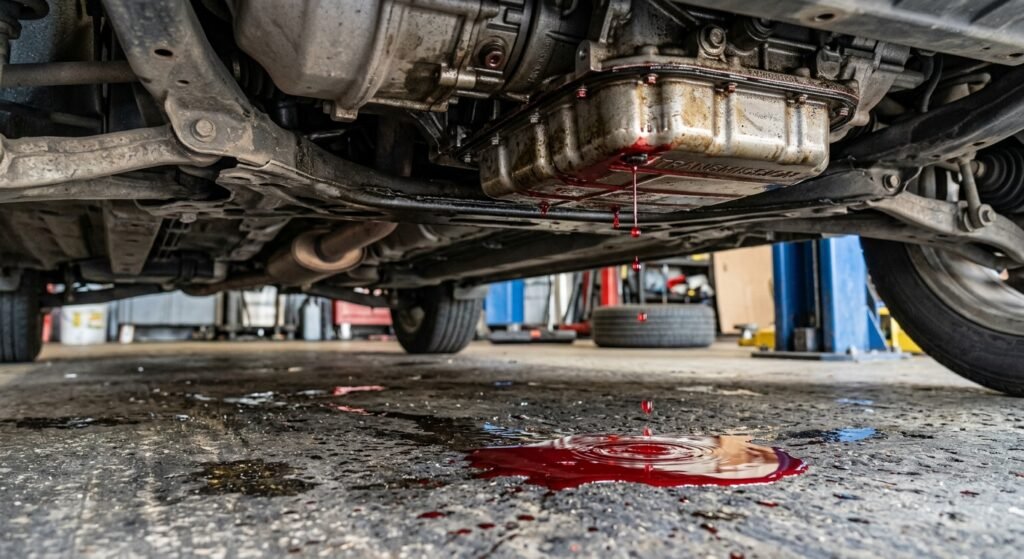
Some modern transmission fluids aren’t bright red, so location and fluid characteristics still matter.
Power Steering Fluid
If your vehicle uses hydraulic power steering, a red, pink, or amber fluid can also come from the power-steering system.
A leak may appear around the steering rack, power-steering pump, reservoir, or hydraulic lines.
Other clues include:
- Heavier steering
- Whining or groaning while turning
- Fluid around the power-steering reservoir
- A falling fluid level
Many newer vehicles use electric power steering and don’t have power-steering fluid at all. If your car has electric steering, look elsewhere for the source of the leak.
Green, Orange, Yellow, Pink, or Blue Fluid
Engine Coolant
Coolant is one of the fluids people most often try to identify by color, but there isn’t a universal coolant color.
Depending on the vehicle and coolant formulation, it can be green, orange, yellow, blue, pink, or another color. Some coolant manufacturers also use different colors for different formulations.
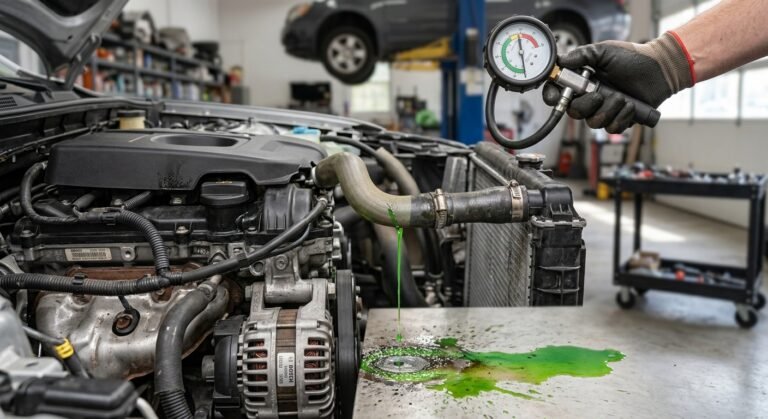
A coolant leak may leave a colored puddle underneath the front or middle portion of the car. You may also notice a sweet smell, low coolant level, or an engine temperature that starts running higher than normal.
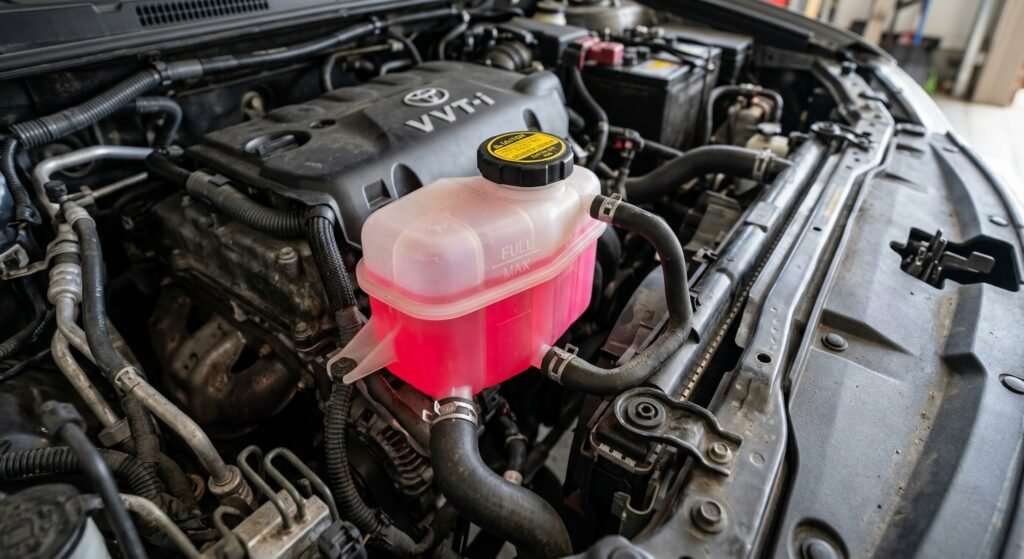
Common leak sources include:
- Radiator
- Radiator hoses
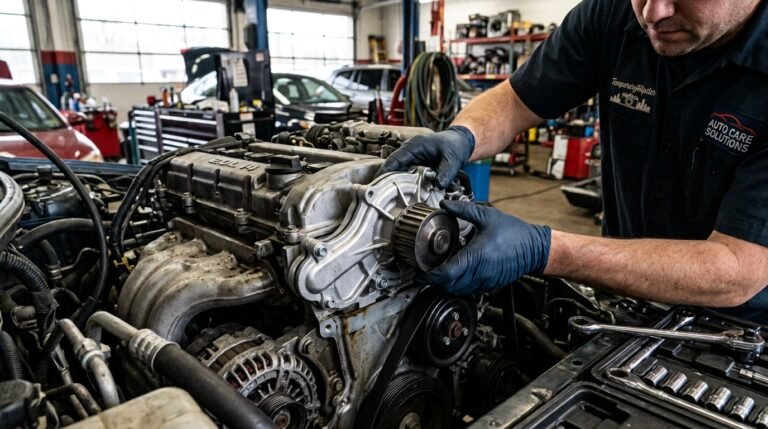
- Water pump
- Thermostat housing
- Expansion tank
- Heater hoses
- Gaskets and seals
Don’t open a hot cooling system. Pressurized coolant can cause serious burns.
If your coolant level keeps dropping, the problem deserves attention even if the temperature gauge hasn’t moved yet. A small leak can become a much larger one once the cooling system reaches operating pressure.
And don’t choose replacement coolant solely by matching the color. Check the specification required for your vehicle. Mixing incompatible coolant formulations can cause problems with the cooling system.
Clear Water Under Your Car
Air-Conditioning Condensation
A small puddle of clear, odorless water underneath the car is often completely normal.
When the air conditioner removes moisture from the cabin air, that moisture collects as condensation and drains underneath the vehicle. On a humid day, you may see quite a bit of water.
The location varies by vehicle, but it’s commonly around the front passenger-side area.
If the liquid is clear and watery, has no strong smell, and appears after using the AC, there’s usually no reason to worry.
Other Sources of Clear Fluid
Clear fluid isn’t automatically AC condensation.
Windshield washer fluid can be clear, blue, pink, or another color depending on the product. Coolant can also appear lighter than expected when diluted with water.
If you’re unsure what the liquid is, don’t taste it or handle an unknown fluid with bare hands. Check the vehicle’s fluid reservoirs and look for other symptoms.
Yellow, Clear, or Brown Fluid Near the Wheels
Brake Fluid
Brake fluid is usually clear to pale yellow when fresh and can become darker as it ages.
A brake-fluid leak may appear around a wheel, brake calliper, brake hose, or underneath the vehicle. The fluid is generally thinner than engine oil.
This is one leak you shouldn’t ignore.
You may also notice:
- A soft or spongy brake pedal
- The brake pedal travelling farther than usual
- A brake warning light
- Reduced braking performance
- A falling fluid level in the reservoir
A brake-fluid leak can allow air into the hydraulic braking system and reduce braking performance.
If you suspect a brake-fluid leak or the brake pedal suddenly feels different, don’t treat it as a normal maintenance issue. Have the braking system inspected before driving any farther than necessary.
Brown or Amber Fluid With a Strong Smell
Differential or Gear Oil
Gear and differential oil is usually thicker than engine oil and often has a strong sulfur-like smell.
On rear-wheel-drive and AWD vehicles, check underneath the differential housing and around axle seals if you suspect this type of leak.
A differential doesn’t need to leak heavily before the problem becomes expensive. The gears and bearings depend on the correct lubricant level to prevent excessive heat and wear.
A whining noise that changes with vehicle speed can sometimes accompany differential problems, although noise alone doesn’t prove there’s a fluid leak.
Fuel Leaks
Gasoline
Gasoline is usually clear to pale yellow and much thinner than engine oil.
The easiest clue is the smell. Gasoline has a strong, unmistakable fuel odor and evaporates quickly.
A fuel leak is a different category of problem from an ordinary oil or coolant seep. Gasoline is highly flammable, so don’t continue driving a vehicle with an active fuel leak.
Don’t try to identify a suspected fuel leak by touching the liquid or deliberately inhaling fumes.
Diesel Fuel
Diesel is generally more oily than gasoline and can be clear, yellowish, or darker depending on its condition.
A diesel leak can come from fuel lines, injectors, connections, the fuel filter housing, or other components of the fuel system.
It may be harder to distinguish from engine oil by appearance alone. The smell, location, and behavior of the liquid provide additional clues.
Fluid Leak Color Chart
| Appearance | Possible fluid | Typical concern |
|---|---|---|
| Black or dark brown, oily | Engine oil | Needs inspection |
| Dark, thick, strong sulfur smell | Gear/differential oil | Needs inspection |
| Red or pink | Automatic transmission fluid | Needs inspection |
| Red, pink, or amber | Power steering fluid | Needs inspection if hydraulic system |
| Green, orange, yellow, pink, blue | Engine coolant | Can lead to overheating |
| Clear, odorless, watery | AC condensation | Usually normal |
| Clear, yellow, or brown | Brake fluid | Potentially urgent |
| Clear/pale yellow with strong fuel smell | Gasoline | Don’t drive with active leak |
| Oily, fuel-like smell | Diesel | Needs inspection |
Treat this chart as a starting point, not a definitive diagnosis. Fluid color changes with age, contamination, and the product used in a particular vehicle.
How to Identify an Unknown Fluid Leak
If you find a puddle and don’t know what it is, work through the clues rather than guessing from color alone.
1. Check where the fluid is dripping
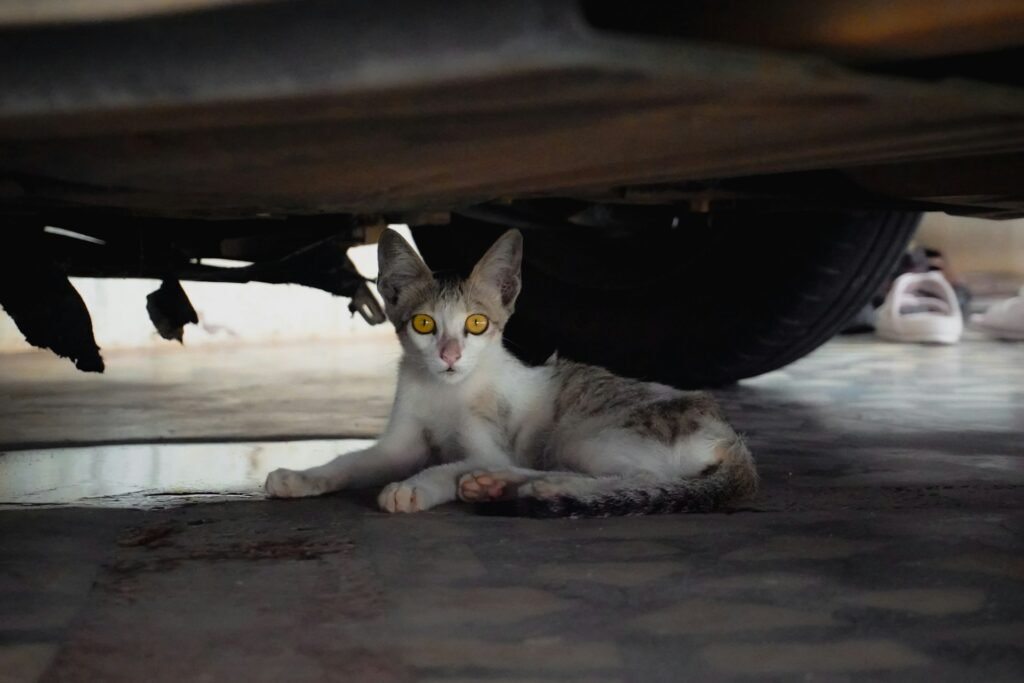
Look at the position of the puddle relative to the front wheels, rear wheels, engine, transmission, and fuel tank.
The drip location isn’t necessarily the leak source because fluids can travel along the underbody.
2. Check the consistency
Is it watery and evaporating quickly? Does it feel oily? Is it thick and sticky?
Don’t put an unknown fluid on your skin to find out. Use visual clues and appropriate protective equipment.
3. Look at the color
Color can narrow the possibilities, but don’t use it as the only test.
For example, coolant comes in multiple colors, while old engine oil can become almost black.
4. Check the smell from a safe distance
Some fluids have distinctive odours.
Coolant often has a sweet smell, gear oil can have a strong sulfur-like odor, and gasoline has a powerful fuel smell.
Never deliberately inhale fumes from an unknown liquid.
5. Check fluid levels
Look at the:
- Engine oil
- Coolant reservoir
- Brake fluid reservoir
- Transmission fluid, where applicable
- Power steering reservoir, where applicable
- Windshield washer reservoir
A falling fluid level can help connect the puddle to a specific system.
6. Look for warning signs
Check the dashboard for warning lights and pay attention to changes in how the car behaves.
For example, a puddle combined with a soft brake pedal is much more concerning than a puddle of clear water after using the air conditioner.
7. Use cardboard to locate the drip
If the vehicle is safely parked, placing a clean piece of cardboard underneath it can help show where fresh fluid is landing.
This can be useful because old stains on a driveway don’t necessarily show where today’s leak is coming from.
Never crawl underneath a vehicle that’s supported only by a jack.
When a Fluid Leak Means You Shouldn’t Drive
Some leaks are inconvenient. Others can make the vehicle unsafe to operate.
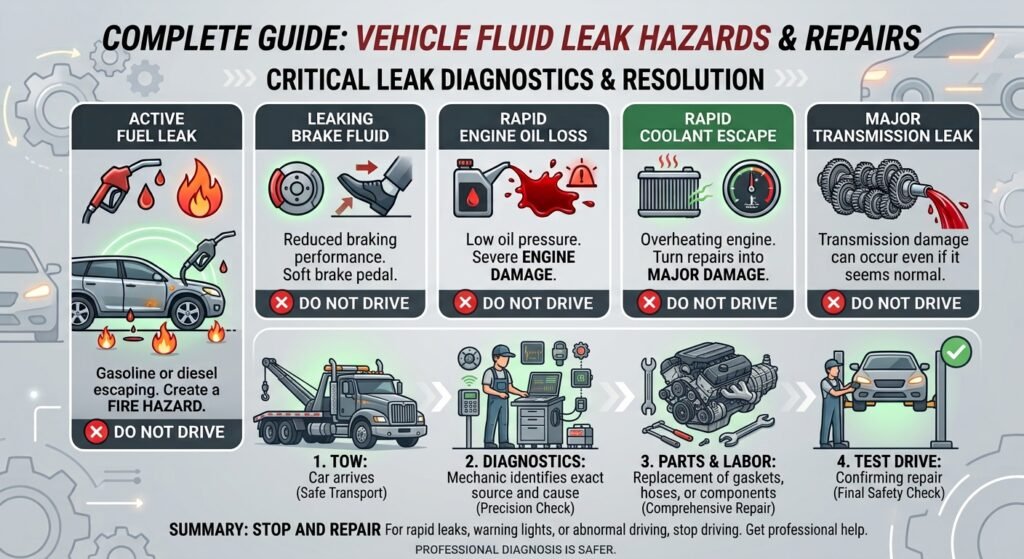
Don’t drive the car if you have an active fuel leak. Gasoline and diesel escaping from the fuel system can create a fire hazard.
Don’t drive if brake fluid is leaking or the brake pedal feels soft. A hydraulic brake-system problem can reduce braking performance.
Stop driving if the engine is rapidly losing oil or the oil-pressure warning light comes on. Low oil pressure can cause severe engine damage within a short time.
Stop if coolant is rapidly escaping and the engine is overheating. Continuing to drive an overheating engine can turn a cooling-system repair into major engine damage.
Take a major transmission leak seriously. A transmission that is losing fluid rapidly can suffer damage even if it still appears to shift normally.
A minor seep is different from a stream of fluid running onto the ground. When the leak is active or the vehicle develops a related warning light or mechanical symptom, professional diagnosis is the safer option.
What Should You Do When You Find a Fluid Leak?
Start by identifying the fluid and checking the corresponding reservoir.
Don’t immediately assume that every puddle requires an expensive repair. A clear puddle after running the AC is normal on most vehicles.
On the other hand, don’t ignore a mysterious oily or colored puddle simply because the car still drives normally. Fluid levels can fall gradually, and some components can tolerate a small leak right up until they can’t.
Take a photo of the puddle, note where it appears, check the relevant fluid levels, and monitor whether fresh fluid appears after the vehicle is parked again.
If you can’t identify the fluid or the leak is growing, have the vehicle inspected.
FAQ
What is the most common fluid leak under a car?
Engine oil and coolant are common sources, but the exact answer depends on the vehicle. A clear puddle after using the air conditioner is also common and is usually normal condensation.
Is clear fluid under my car normal?
It can be. Clear, odourless water that appears after running the air conditioner is usually condensation from the AC system.
What does red fluid under a car mean?
Red or pink fluid can be automatic transmission fluid or, on vehicles with hydraulic power steering, power-steering fluid. Check the location, smell, and relevant fluid levels before assuming the source.
What color is coolant?
Coolant doesn’t have one universal color. Depending on the formulation, it can be green, orange, yellow, blue, pink, or another color. Always use the coolant specification recommended for your vehicle rather than matching color alone.
What does brake fluid look like?
Fresh brake fluid is generally clear to pale yellow. It becomes darker with age. A leak combined with a soft brake pedal or reduced braking performance requires immediate attention.
Can I drive with a fluid leak?
It depends on the fluid and severity. A small oil seep may allow you to drive to a repair shop while monitoring the oil level. An active fuel leak, brake-fluid leak, rapid coolant loss, or oil-pressure warning requires a much more cautious response and may make driving unsafe.