
If your car is overheating at idle but not while driving, the difference between those two conditions gives you an important diagnostic clue. When the vehicle is moving, air is forced through the radiator by the car’s forward motion. At a standstill, the cooling system has to rely much more on the cooling fan to provide airflow.
That makes a cooling-fan or airflow problem one of the first things to investigate. However, low coolant, trapped air, a restricted radiator, thermostat problems, a failing water pump, or inaccurate temperature readings can produce a similar pattern.
Why Does a Car Overheat at Idle but Cool Down While Driving?
Your engine continues generating heat even when the car is sitting at a traffic light. The difference is how much air reaches the radiator.
While driving, forward motion pushes air through the grille and radiator. This natural airflow helps remove heat from the coolant. When the vehicle stops, that airflow drops substantially, so the cooling fan has to move air through the radiator instead.
This creates a familiar pattern:
Temperature rises while idling → car starts moving → temperature drops.
When that happens, start by checking the components responsible for low-speed airflow, particularly the radiator fan and anything that prevents air from passing efficiently through the radiator.
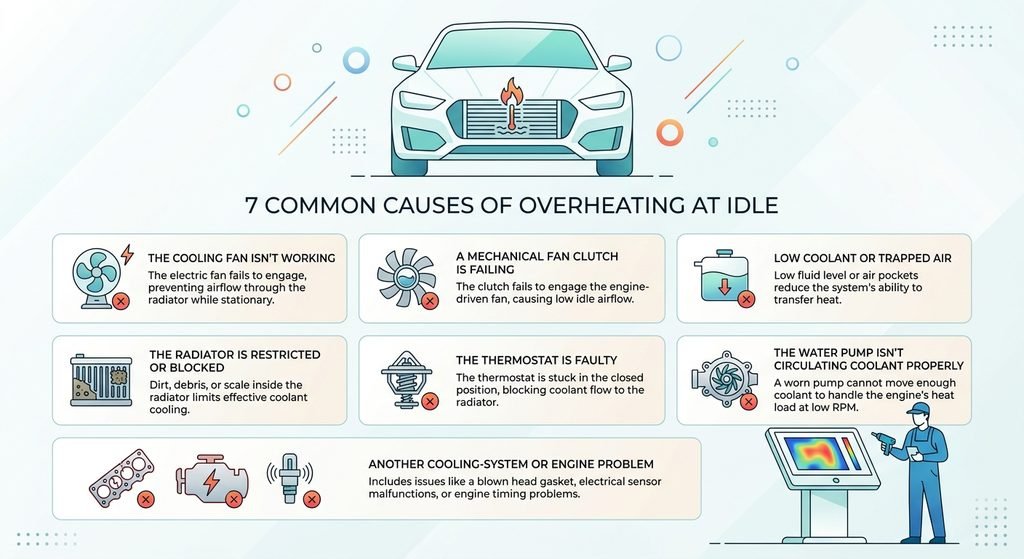
7 Common Causes of Overheating at Idle
1. The Cooling Fan Isn’t Working
A failed cooling fan is one of the most likely causes of an engine that overheats while stationary but returns to normal temperature once you start moving.
Modern vehicles commonly use electric cooling fans. Depending on the design, the fan may be controlled by the engine computer, a temperature sensor, relays, a control module, or a combination of these components.
Possible faults include:
- Failed fan motor
- Blown fuse
- Bad relay
- Damaged wiring or connector
- Faulty fan-control module
- Incorrect temperature-sensor signal
- Fan that only operates at one speed
Some vehicles use multiple fan speeds. A fan can therefore appear to work while still failing to provide adequate airflow when the engine gets hot.
The key clue is that the engine stays at normal temperature while moving but begins getting hotter when stopped.
2. A Mechanical Fan Clutch Is Failing
Older vehicles and some truck or rear-wheel-drive designs use a mechanically driven cooling fan rather than an electric fan.
These systems can use a viscous fan clutch. The clutch changes how strongly the fan engages depending on temperature.
When the engine is hot, the fan should provide substantial airflow. If the clutch is worn or damaged, the fan may spin without producing enough airflow through the radiator at idle.
This can create the same symptom as an electric-fan failure: the vehicle heats up in traffic but cools down once road speed provides additional airflow.
Not every vehicle uses a fan clutch, so this check applies only to vehicles equipped with a mechanical fan system.
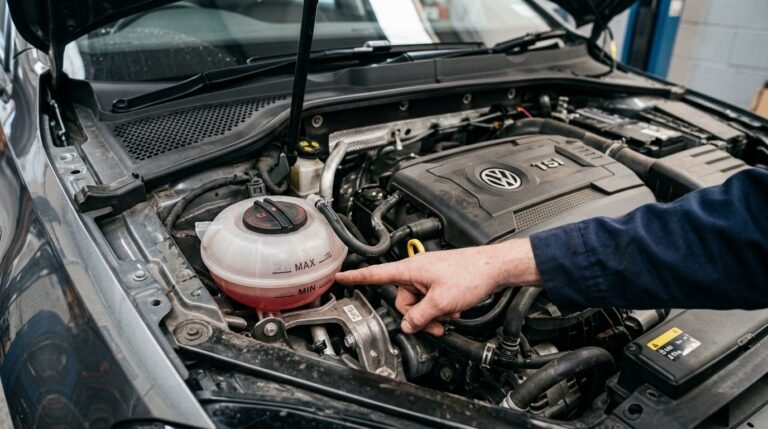
The cooling system needs enough coolant to absorb and transfer engine heat.
3. Low Coolant or Trapped Air
If the coolant level is too low, the system may struggle to maintain proper circulation and heat transfer. Air trapped inside the cooling system can also interfere with coolant flow and create inconsistent temperature behavior.
Possible clues include:
- Coolant below the MIN or LOW mark
- Repeated need to add coolant
- Sweet coolant smell
- Visible leaks or dried coolant residue
- Heater suddenly blowing cold air
- Temperature fluctuations
Check the coolant level only when the engine is completely cold.
If the level keeps dropping, read our guide on why your coolant level keeps dropping.
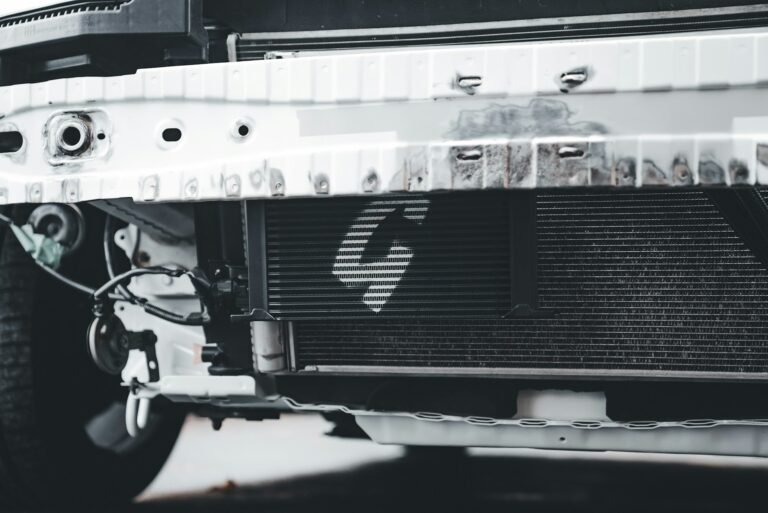
4. The Radiator Is Restricted or Blocked
Radiator problems can affect both coolant flow and airflow.
External restriction occurs when dirt, insects, leaves, mud, or other debris blocks the radiator fins. Bent fins can also reduce airflow.
Internal restriction is different. Corrosion, deposits, or contamination can reduce the flow of coolant through the radiator’s internal passages.
An engine may cope better when the vehicle is moving because the higher airflow provides additional cooling capacity. Once the vehicle stops, the restricted radiator may no longer be able to reject enough heat.
Check our guide to the signs of a failing radiator for a more detailed inspection checklist.
5. The Thermostat Is Faulty
The thermostat regulates coolant flow between the engine and radiator.
If it fails to open correctly, hot coolant may not circulate through the radiator as intended. This can cause overheating.
A thermostat problem isn’t limited to idle-only overheating, though. Depending on the failure and vehicle, it can cause temperature problems under several different driving conditions.
That’s why replacing the thermostat solely because the car overheats at idle isn’t a reliable diagnostic strategy.
Look at the complete symptom pattern instead: coolant level, fan operation, radiator condition, temperature behavior, and whether the engine overheats while driving as well.
6. The Water Pump Isn’t Circulating Coolant Properly
The water pump moves coolant through the engine and radiator.
A failing pump may have a damaged impeller, worn bearing, leaking seal, or another mechanical problem that reduces coolant circulation.
Possible symptoms include:
- Engine overheating
- Coolant leakage
- Grinding or whining noises
- Temperature fluctuations
- Poor cabin heat
- Coolant residue around the pump
A weak water pump can therefore contribute to idle overheating, particularly when the cooling system is already operating close to its limits.
For more information, see our guide to the signs of a failing water pump.
Not every case fits one of the common categories above.
Other possibilities include:
- Cooling-system pressure problems
- Faulty coolant-temperature sensor
- Severe coolant contamination
- A restriction elsewhere in the cooling circuit
- Combustion gases entering the cooling system
- Internal engine problems
- Incorrect coolant mixture
A faulty temperature sensor is particularly worth considering if the gauge behaves strangely but the engine doesn’t show other signs of excessive heat.
This is why diagnosis should focus on evidence rather than simply replacing the most obvious component.
How to Tell If the Radiator Fan Is the Problem
The radiator fan should be high on your inspection list when the car gets hot at idle.
Start with a cold engine and observe the fan as the vehicle warms up. Exactly when the fan starts depends on the vehicle’s design and control strategy, so don’t assume that every fan should run continuously.
You can check:
- Whether the fan operates at all.
- Whether it switches on as the engine temperature rises.
- Whether the fan appears to operate at different speeds when appropriate.
- Whether the fan fuse is intact.
- Whether relevant relays are functioning.
- Whether electrical connectors and wiring show damage.
Some vehicles also use fan operation as part of their A/C control strategy, which can provide an additional diagnostic clue.
Be extremely careful around cooling fans. Electric fans can start automatically, potentially even when you aren’t expecting them to. Keep hands, tools, loose clothing, and hair away from the fan assembly.
Don’t bypass safety circuits or apply power directly to a fan motor unless you’re qualified to perform that test safely.
What Does the A/C Have to Do With Overheating at Idle?
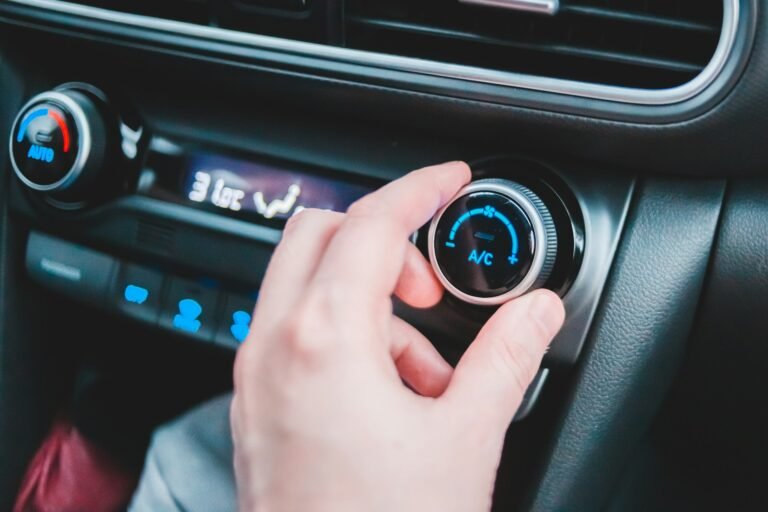
The A/C system adds another reason airflow matters at low vehicle speeds.
The A/C condenser needs airflow to reject heat from the refrigerant. At road speed, natural airflow through the front of the vehicle helps. At idle, the vehicle may rely heavily on its cooling-fan system to maintain airflow across the condenser and radiator.
This means a vehicle with a fan or airflow problem can sometimes show two symptoms together:
Engine temperature rises at idle + A/C performance becomes weaker while stationary.
That combination makes an airflow problem particularly worth investigating.
However, A/C behaviour varies by vehicle, so warm A/C air at idle shouldn’t be treated as definitive proof that the radiator fan has failed. Low refrigerant, compressor-control issues, condenser problems, or other A/C faults can cause poor cooling as well.
Overheats in Traffic but Not on the Highway: What Does It Mean?
The driving conditions can help narrow down the problem.
| Symptom pattern | Possible cause |
|---|---|
| Overheats mainly while stationary | Cooling fan or airflow problem |
| Overheats at idle with low coolant | Coolant loss or air in system |
| Overheats at idle and A/C becomes weak | Fan or airflow problem is worth checking |
| Overheats both at idle and highway speed | Broader cooling-system problem |
| Temperature fluctuates sharply | Air pocket, thermostat, sensor, or circulation issue |
| Steam or visible coolant loss | Cooling-system leak or severe overheating |
This isn’t a diagnostic table that can identify the failed part by itself. It simply shows why the idle-versus-driving pattern is useful.
If the temperature drops almost immediately after you begin moving, airflow becomes a particularly strong suspect because the radiator is suddenly receiving much more air.
Can Low Coolant Cause a Car to Overheat Only at Idle?
Yes, it can.
A low coolant level reduces the amount of fluid available to absorb and transport engine heat. Depending on how severe the coolant loss is, the problem may become more noticeable under specific operating conditions.
Look for:
- Coolant below the recommended level
- A reservoir that keeps going empty
- Visible leaks
- Sweet coolant smell
- Poor heater performance
- Temperature fluctuations
However, don’t assume low coolant is the root cause simply because the reservoir is low. The low level may itself be the result of a leak.
If you have to add coolant repeatedly, the cooling system should be inspected rather than continuously topped up.
Can You Drive a Car That Overheats at Idle?
You shouldn’t continue driving a vehicle that is actually overheating.
There is a major difference between a temperature gauge moving slightly within its normal operating range and the gauge climbing toward the red zone.
Stop driving if:
- The temperature gauge reaches the red zone
- A coolant-temperature warning appears
- Steam comes from under the hood
- Coolant is being expelled
- The temperature continues rising
- The engine starts running abnormally
Don’t assume that driving faster is a safe solution just because the temperature falls once you’re moving. That may temporarily increase airflow without fixing the underlying problem.
Continuing to operate an overheating engine can turn a relatively simple fan, hose, or cooling-system repair into major engine damage.
What Should You Check First?
A logical diagnostic sequence is better than replacing parts at random.
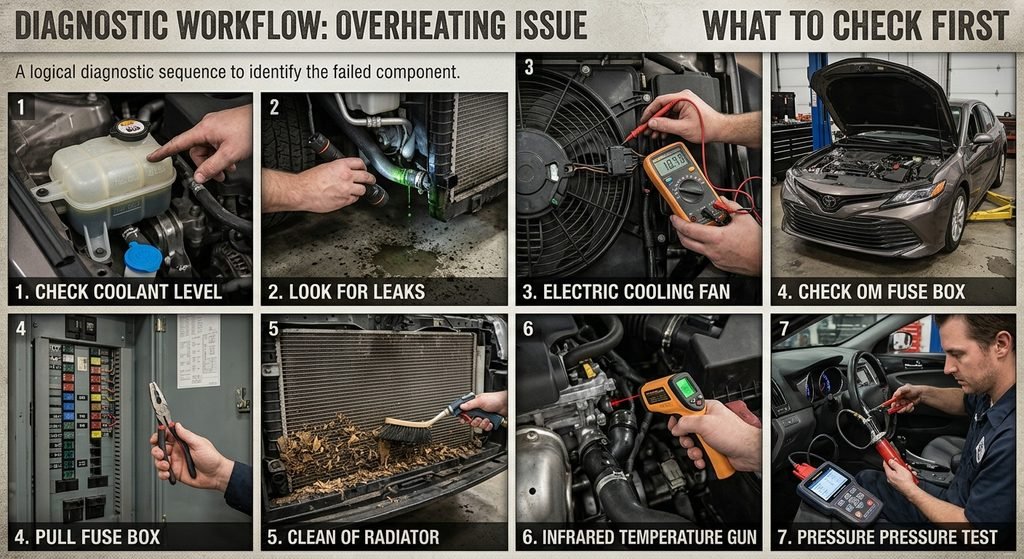
Step 1: Check the coolant level
Wait until the engine is completely cold and compare the level with the manufacturer’s markings.
Step 2: Look for coolant leaks
Inspect the reservoir, hoses, radiator, water pump area, and the ground beneath the vehicle.
Step 3: Check the cooling fan
Determine whether the fan operates when the cooling system reaches the conditions that command fan operation.
Step 4: Inspect the fan circuit
Where appropriate, check the fuse, relay, connectors, wiring, and fan-control components.
Step 5: Inspect radiator airflow
Look for leaves, dirt, insects, mud, bent fins, or other restrictions.
Step 6: Consider coolant circulation
If airflow appears normal, investigate the thermostat, water pump, trapped air, and possible internal restrictions.
Step 7: Test the cooling system
If the cause remains unclear, professional testing can include cooling-system pressure testing, temperature measurements, scan-tool data, and other diagnostic procedures.
The goal is to identify the failed component before buying replacement parts.
When Should You Stop Driving Immediately?
Stop the engine when the vehicle is clearly overheating.
The warning signs that require immediate attention include:
- Temperature gauge entering the red zone
- Overheating warning light
- Steam from under the hood
- Rapid coolant loss
- Strong coolant smell combined with rising temperature
- Severe engine running problems
Move somewhere safe, shut the engine off, and allow it to cool.
Never remove a radiator cap or pressurised coolant reservoir cap while the engine is hot. The cooling system may be under pressure, and hot coolant or steam can cause serious burns.
How to Prevent Overheating at Idle
Good cooling-system maintenance reduces the chance of an idle-overheating problem.
Keep the coolant at the correct level and investigate any unexplained loss. Inspect the radiator and condenser area for debris that could restrict airflow. Follow the manufacturer’s coolant service recommendations and pay attention to changes in temperature behaviour.
It’s also worth checking cooling fans when servicing the cooling system, particularly if you’ve noticed that the vehicle gets progressively hotter in traffic.
Don’t ignore a temperature gauge that behaves differently from normal. A small cooling-system problem can become a much more expensive engine problem if overheating is allowed to continue.
FAQ
Why does my car overheat when idling but not when driving?
The pattern often points toward insufficient cooling at low vehicle speed. The cooling fan, fan clutch, radiator airflow, coolant level, thermostat, and water pump are among the main things to check.
Why does my car get hot in traffic but cool down on the highway?
At highway speed, natural airflow through the radiator helps remove heat. In traffic, the cooling system relies much more on its fan to move air. A fan or airflow problem can therefore become obvious at low speed.
Should the radiator fan run when the car is idling?
It depends on the vehicle and operating conditions. Many cooling fans are controlled automatically and switch on when the engine reaches a specified temperature or when certain other conditions require additional airflow.
Can low coolant cause overheating at idle?
Yes. Low coolant can reduce the cooling system’s ability to transfer heat. If the coolant level keeps falling, the reason for the coolant loss should be identified.
Can a bad thermostat cause overheating at idle?
Yes, although thermostat failure can cause overheating under other conditions too. A thermostat should be diagnosed as part of the entire cooling system rather than replaced based on idle overheating alone.
Can a bad water pump cause overheating at idle?
Yes. A failing water pump can reduce coolant circulation and contribute to overheating. Other symptoms may include coolant leakage, unusual noises, temperature fluctuations, or poor cabin heating.
Why does my car overheat at idle with the A/C on?
The A/C system requires airflow through the condenser, and the engine cooling system may also depend on the same fan system at low speed. A fan or airflow fault can therefore make both engine cooling and A/C performance worse while the vehicle is stationary.
Can I drive if my car only overheats at idle?
A vehicle that is actually overheating shouldn’t be driven. Even if the temperature drops once you start moving, the underlying problem can worsen and lead to engine damage.
How do I know if my radiator fan is bad?
Check whether the fan operates under the conditions that should command it on, and inspect the relevant fuse, relay, wiring, connectors, and control components. Because fan-control strategies vary between vehicles, the exact test procedure depends on the car.
Why does my temperature gauge go up at a red light?
At a red light, natural airflow through the radiator is greatly reduced. If the cooling fan isn’t providing sufficient airflow, or another cooling-system problem is reducing heat transfer, engine temperature can rise while the vehicle is stationary.

1 Comments