Why is my car losing oil? If the oil level keeps dropping between oil changes, something is causing oil to leave the engine. The most common explanations are an external oil leak or oil being burned inside the engine.
A visible puddle doesn’t always make the problem obvious. Oil can leak onto the engine, collect behind an undertray, reach a hot exhaust component and burn off, or enter the combustion chamber without leaving a noticeable mark on the ground.
Finding the cause matters because repeatedly adding oil only manages the symptom. A small leak can become a major one, while excessive oil consumption can point to worn or damaged engine components.
Why Is My Car Losing Oil?
Engine oil can leave the lubrication system in several ways:
- It can leak externally through a gasket, seal, filter, drain plug, or damaged component.
- The engine can burn oil inside the combustion chamber.
- A faulty PCV system can pull excessive oil vapor into the intake.
- A turbocharger can consume or leak oil in some circumstances.
- Oil can be lost because of an incorrect service procedure or another maintenance problem.
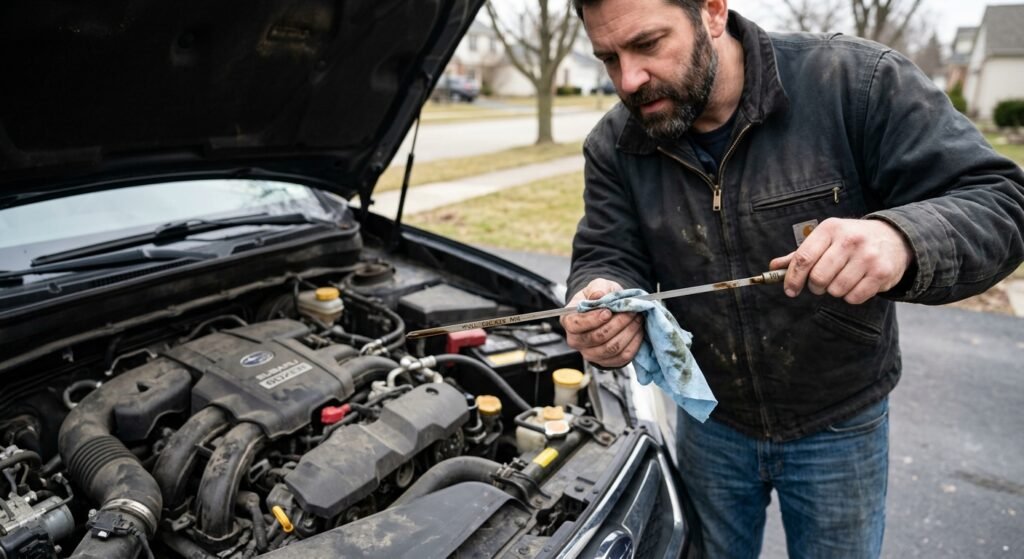
The first job is to determine whether you’re dealing with a leak or oil consumption. The symptoms aren’t always obvious, so you’ll need to look at both the engine and the oil level over time.
Common Causes of External Oil Leaks
Valve Cover Gasket Leak
The valve cover sits on top of the engine and seals the upper part of the cylinder head. Its gasket can harden, shrink, or crack with age.
Oil may appear around the edge of the valve cover or run down the side of the engine. If the leak reaches a hot exhaust manifold or another hot component, you may notice a burning-oil smell or smoke from the engine bay.
A valve-cover leak is often easier to spot from above than from underneath the car.
Oil Pan Gasket or Seal Leak
The oil pan sits at the bottom of the engine and holds the oil when the engine isn’t circulating it.
A damaged gasket, deteriorated seal, or damaged pan can allow oil to escape. A low-hanging oil pan can also be damaged by road debris, especially on vehicles with limited ground clearance.
If you see fresh oil underneath the engine after parking, the oil pan area is one of the places worth inspecting.
Oil Filter or Drain Plug Leak
A leak that appears shortly after an oil change deserves particular attention.
The oil filter may not have been installed correctly, its seal may be damaged, or the drain plug may not be properly sealed. Some vehicles also require a new sealing washer when the drain plug is removed.
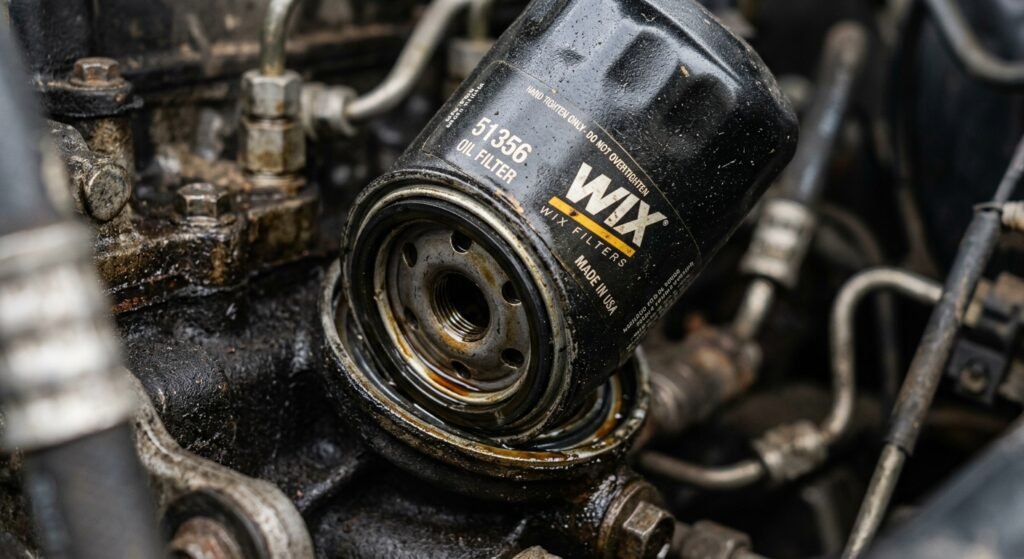
Oil spilled during an oil change can create a temporary stain, so don’t assume every spot underneath the car means the filter or drain plug is leaking. Clean the area and check whether fresh oil appears again.
Crankshaft and Camshaft Seal Leaks
Crankshaft and camshaft seals prevent oil from escaping around rotating shafts.
When one deteriorates, oil can appear behind pulleys, around the timing-cover area, or near the junction between the engine and transmission. These leaks can be difficult to identify because the source may be hidden behind other components.
A mechanic may need to remove covers or other parts before the exact source becomes visible.
Why Is My Car Losing Oil Without a Visible Leak?
A car can lose oil without leaving an obvious puddle.
One possibility is that the leak is small and only occurs while the engine is running. Oil may then spread across the engine or underbody instead of dripping directly onto the ground.
An engine undertray can also catch leaking oil and hide the source.
Another possibility is that oil is reaching a hot engine or exhaust component and burning before it reaches the ground. You may notice an oil smell or smoke rather than a puddle.
If there’s no evidence of an external leak, the engine may be burning oil internally.
Common Causes of Internal Oil Consumption
Worn or Stuck Piston Rings
Piston rings help control the oil around the pistons and prevent excessive amounts from entering the combustion chamber.
If the oil-control rings become worn or stuck with deposits, oil can pass into the combustion chamber and burn with the air-fuel mixture.
Possible signs include:
- Increasing oil consumption
- Blue or grey exhaust smoke
- Fouled spark plugs
- Reduced engine performance in some cases
- Increased emissions
Compression testing and leak-down testing can help determine whether internal engine wear is involved.
Worn Valve Stem Seals
Valve stem seals control oil around the engine’s valves. When they deteriorate, oil can enter the combustion chamber through the valve area.
One possible clue is a puff of blue smoke after the vehicle has been sitting and then accelerating. The exact smoke pattern varies depending on the engine and the severity of the problem.
Replacing valve stem seals is a different repair from fixing an external oil leak, so identifying where the oil is going is essential.
Faulty PCV System
The positive crankcase ventilation (PCV) system removes gases and vapors that build up inside the engine crankcase.
A faulty or restricted PCV system can alter crankcase pressure and contribute to oil leaks or increased oil consumption. In some engines, excessive oil vapor can also be drawn into the intake system.
PCV components are relatively inexpensive on many vehicles, which makes them worth checking before assuming the engine needs major internal repairs.
Turbocharger Oil Problems
Turbocharged engines use engine oil to lubricate and cool the turbocharger.
A turbocharger with damaged components or an oil-sealing problem can allow oil into the intake or exhaust side. This can contribute to oil consumption, blue smoke, or other symptoms.
Don’t assume that every turbocharged engine losing oil has a failed turbo. Other causes, including piston rings, valve seals, and the PCV system, can produce similar symptoms.
Signs Your Car Is Leaking Oil
Several clues can help you determine whether oil is escaping externally.
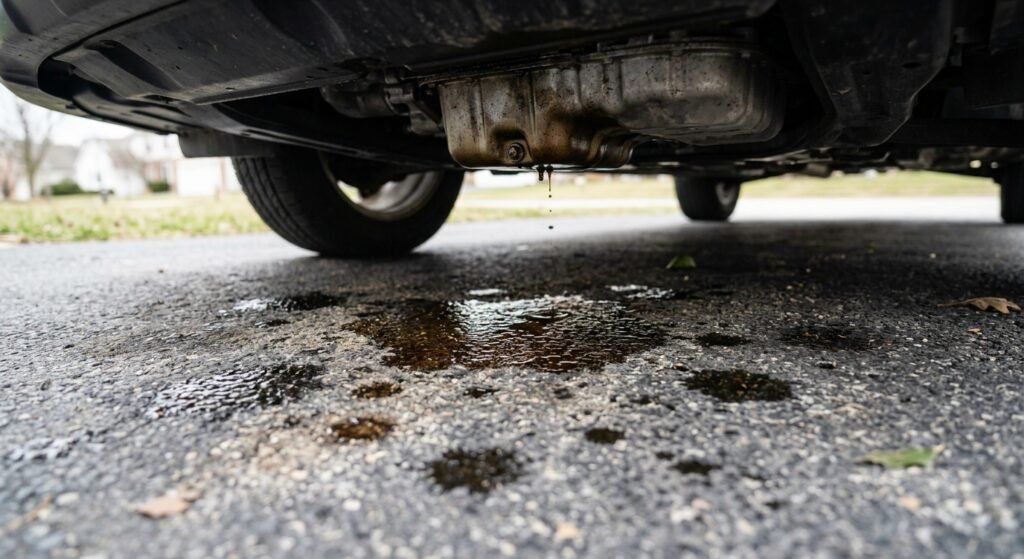
Dark or oily spots under the car
Fresh engine oil is usually brown to amber when new and becomes darker with use. A wet, oily spot under the engine is more useful as evidence of a leak than the exact color of the fluid.
Oil around the engine
Look for wet areas around the valve cover, oil filter, oil pan, and other sealing surfaces.
Remember that oil can travel downward, so the lowest wet point isn’t necessarily where the leak starts.
Burning-oil smell
Oil dripping onto a hot exhaust component can produce a strong burnt-oil odor.
If you smell burning oil while driving or after parking, inspect the engine bay when it’s safe to do so. Don’t touch hot components.
Smoke from the engine bay
Smoke from under the hood can occur when leaking oil reaches a hot surface.
This shouldn’t be ignored. A significant oil leak can eventually lower the engine oil level, and oil contacting hot components creates another potential hazard.
The oil level keeps dropping
Check the oil level at regular intervals and keep track of how quickly it falls.
If the level drops significantly between oil changes, don’t assume the engine simply “uses a little oil.” Measure the consumption and investigate the cause.
How to Find an Oil Leak
You don’t need specialized equipment to perform an initial inspection.
1. Check the oil level
Park on level ground and follow the procedure in your owner’s manual. Some manufacturers recommend checking the oil when the engine is cold, while others specify waiting several minutes after shutdown.
Record the level so you have a reference point.
If it’s below the minimum mark, add the correct oil before operating the vehicle further.
2. Check underneath the car
Look for fresh oil around the engine and on the ground after parking.
Don’t rely solely on an old stain. A dirty engine can have oil residue from an earlier leak or a previous oil change.
3. Inspect the top of the engine
Look around the valve cover, oil filler area, oil filter housing, and visible seals.
Fresh oil may appear as a wet trail rather than a large pool.
4. Inspect underneath the engine
Check the oil pan, drain plug, and surrounding areas.
If the car has an undertray, oil may be collecting there instead of reaching the ground. Removing an undertray for inspection should only be done when the vehicle is safely supported.
Never crawl underneath a car supported only by a jack.
5. Clean and monitor the area
If the source isn’t obvious, clean the accessible oily area and check it again after driving.
A fresh leak is much easier to trace than a layer of oil that has accumulated over several months.
6. Use UV dye if necessary
A mechanic can add an oil-compatible UV dye to the engine oil and use a UV lamp to trace the leak.
This can be useful when oil is escaping from a difficult-to-reach location or spreading across several engine components.
How to Tell If Your Engine Is Burning Oil
Internal oil consumption is more likely when the oil level keeps dropping but you can’t find an external leak.
Watch for:
- Blue or gray exhaust smoke
- Oil consumption that increases over time
- Oil-fouled spark plugs
- Oil residue in the intake system
- Engine performance problems
- A falling oil level without visible leaks
A car can burn oil without producing obvious smoke. A relatively small amount of oil may be consumed without creating a visible cloud from the exhaust.
If consumption is significant, a compression test, leak-down test, or other diagnostic checks may be needed.
How Much Oil Loss Is Too Much?
There’s no single oil-consumption number that applies to every engine.
Engine design, mileage, age, driving conditions, and manufacturer specifications all affect normal oil consumption. Some engines are known to use more oil than others.
The most useful warning sign is a change from your vehicle’s normal oil consumption.
If your car normally needs almost no oil between services and suddenly requires a quart every few hundred miles, that’s a reason to investigate.
Keep a simple record of:
- Oil level
- Mileage
- Amount of oil added
- Date of each top-up
That gives you useful information for diagnosing the problem and helps a mechanic understand how quickly the engine is losing oil.
Can You Drive a Car That Is Losing Oil?
It depends on how quickly the oil is disappearing and whether the engine maintains safe oil pressure.
A minor seep that leaves a small amount of residue may allow you to drive to a repair shop while monitoring the oil level. A rapidly leaking engine is a different situation.
Don’t continue driving if:
- Oil is pouring or dripping rapidly.
- The oil level is dangerously low.
- The oil-pressure warning light comes on.
- The engine develops severe knocking or other unusual mechanical noise.
- Oil is producing significant smoke around the engine.
If the red oil-pressure warning light comes on while the engine is running, pull over safely and shut the engine off. Low oil pressure can cause severe internal engine damage if the engine continues operating.
Adding oil can restore the level, but it won’t fix the underlying problem.
What Should You Do If Your Car Keeps Losing Oil?
Start with the simplest checks.
- Check the oil level correctly.
- Add the manufacturer’s specified oil if necessary.
- Look for fresh oil under and around the engine.
- Check for a burning-oil smell or smoke.
- Watch the exhaust for blue or gray smoke.
- Record how much oil the engine consumes over a known distance.
- Have the vehicle inspected if the level continues to fall.
If you’re also approaching your scheduled service interval, an oil change may be due. Our guide on how often you should change your engine oil explains how mileage, time, driving conditions, and oil type affect the service interval.
If you’re already seeing several warning signs, our guide to signs your car needs an oil change covers the symptoms that can indicate overdue maintenance.
FAQ
Why is my car losing oil but not leaking?
The engine may be burning oil internally, or the external leak may be too small or hidden to produce a puddle. Oil can also collect on an engine undertray or burn when it reaches a hot component.
Can a bad oil filter cause an oil leak?
Yes. An incorrectly installed filter, damaged filter seal, or improperly fitted component can allow oil to escape. This is particularly worth checking if the leak appeared immediately after an oil change.
Why is my car leaking oil after an oil change?
Check the oil filter, drain plug, and sealing washer first. Spilled oil can also leave temporary spots underneath the vehicle. If fresh oil continues appearing after the area is cleaned, the source should be inspected.
Can low oil cause engine damage?
Yes. If the oil level becomes too low, the engine may not maintain adequate lubrication and oil pressure. Continued operation in that condition can cause severe internal damage.
What does burning oil smell like?
It usually has a strong, acrid smell, particularly when engine oil reaches a hot exhaust or other high-temperature component. Smoke from the engine bay may accompany the smell.
Can a car burn oil without smoking?
Yes. Small amounts of oil can be consumed without producing obvious visible exhaust smoke. A consistently falling oil level can be the first clue.