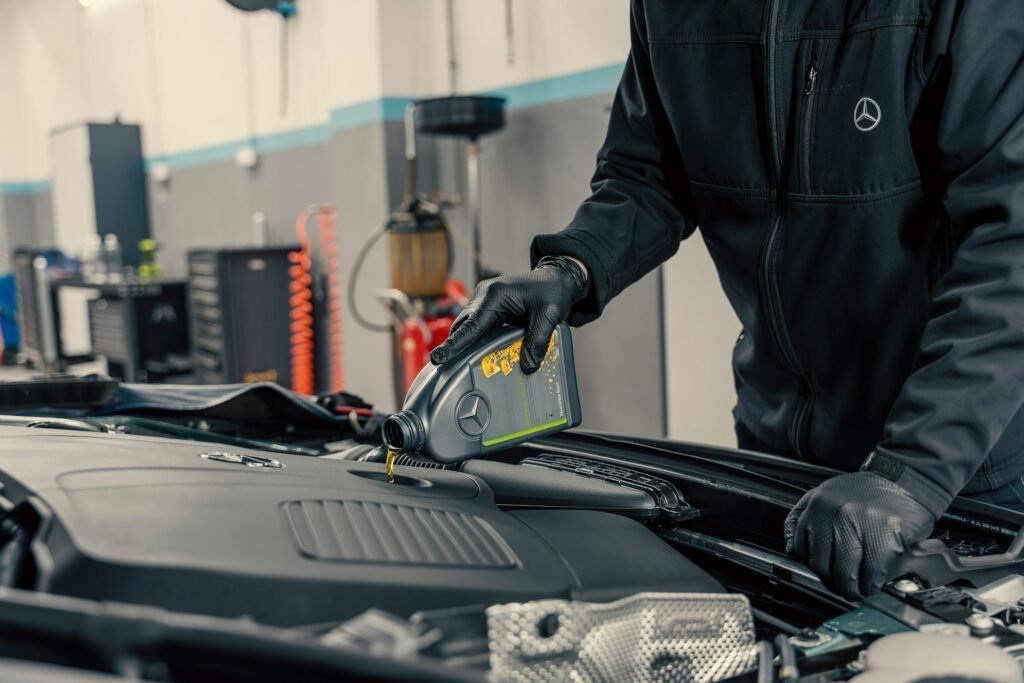
Most modern cars don’t need an oil change every 3,000 miles. For many vehicles, the recommended interval is closer to 5,000, 7,500, 10,000 miles, or even longer, depending on the engine, oil specification, and driving conditions.
The correct answer to “how often should you change your engine oil?” is the interval specified by your vehicle manufacturer. Your owner’s manual may give separate schedules for normal and severe driving, and some newer vehicles calculate the interval using an oil-life monitoring system.
Mileage isn’t the only factor, either. Short trips, heavy traffic, towing, extreme temperatures, and frequent idling can shorten the useful life of engine oil.
How Often Should You Change Your Engine Oil?
For a typical modern gasoline vehicle, an oil change interval of roughly 5,000 to 10,000 miles is common, but you shouldn’t treat that range as a universal rule.
Your owner’s manual takes priority.
Some manufacturers specify a fixed mileage and time interval. Others use an oil-life monitoring system that estimates when the oil needs replacing based on how the vehicle is driven. Certain vehicles may also have different recommendations for normal and severe service.
For example, a car driven mostly on the highway at a steady speed may follow a longer service interval than the same car used for short trips around town every day.
Time matters as well. If you drive only 3,000 miles a year, that doesn’t necessarily mean you can leave the same oil in the engine for several years. Manufacturers generally specify a maximum time as well as a maximum mileage.
Follow whichever limit comes first.
What Changes the Recommended Oil Change Interval?
Your driving conditions can make a noticeable difference to oil life.
Short trips
Frequent trips of only a few miles can be harder on engine oil than longer drives. The engine may not reach and maintain its normal operating temperature for long enough to evaporate accumulated moisture and fuel contamination.
If most of your driving consists of dropping the kids at school, running errands, and returning home, check whether your manufacturer classifies that as severe service.
Stop-and-go traffic
Heavy city traffic means more idling, repeated acceleration, and frequent changes in engine speed. The engine can spend a lot of time running without covering many miles.
This is one reason a vehicle used primarily in urban traffic may have a shorter recommended oil-change interval than the same vehicle used mainly for highway driving.
Towing and heavy loads
Towing a trailer, carrying heavy loads, or regularly driving through steep terrain increases engine workload.
If your vehicle manufacturer lists towing or heavy-load use under its severe-service schedule, use that interval rather than the normal one.
Extreme temperatures
Very high and very low temperatures affect engine operation and oil performance.
Cold starts are particularly demanding because oil is thicker when cold and needs time to circulate through the engine. Extremely hot conditions can also increase thermal stress on the lubricant.
Dusty or dirty conditions
Driving regularly on unpaved roads or in dusty environments can increase the amount of contamination entering the engine.
Your air filter helps keep dirt out of the intake system, but operating conditions can still affect maintenance requirements. Some manufacturers specifically include dusty environments in their severe-service recommendations.
Frequent idling
Long periods of idling add engine operating time without adding much mileage. If you regularly spend extended periods sitting with the engine running, don’t assume that a mileage-only calculation tells the whole story.
Does Synthetic Oil Last Longer?
Usually, yes, synthetic oil can support longer service intervals than conventional oil, but the oil itself doesn’t override the vehicle manufacturer’s maintenance schedule.
Synthetic oils are engineered to maintain their properties under demanding conditions and can provide strong resistance to breakdown and deposits. Some products are specifically designed for extended drain intervals.
That doesn’t mean you should put synthetic oil in your engine and automatically wait 15,000 or 20,000 miles.
The oil must meet the viscosity, performance specification, and manufacturer approval required for your engine. The vehicle manufacturer’s recommended interval should also be followed, particularly while the vehicle is under warranty.
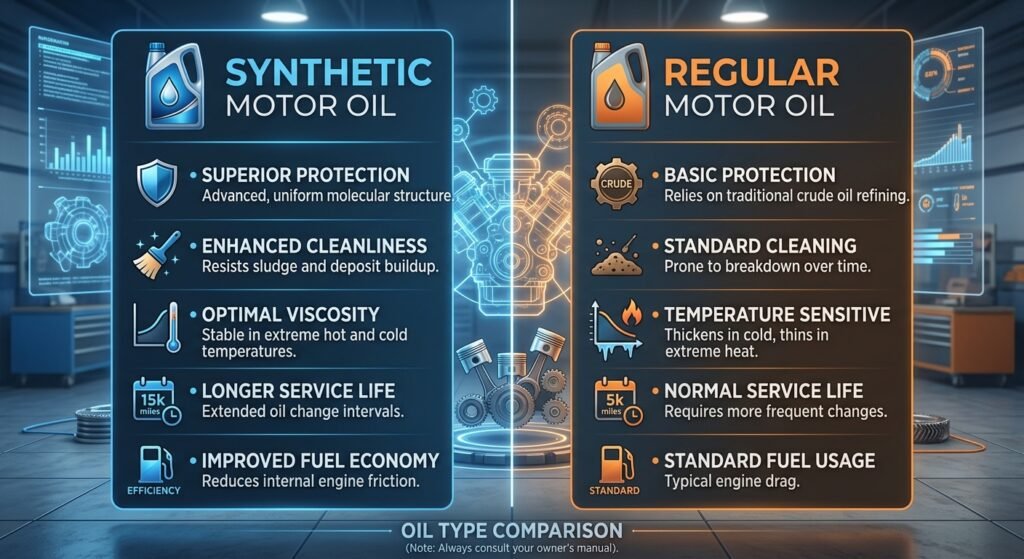
For example, Mobil 1 offers synthetic oils with stated service intervals ranging from 7,500 miles to 25,000 miles for specific products and applications. Those numbers apply to the particular oil and conditions, not to every engine that uses synthetic oil.
How Do You Know When Your Oil Needs Changing?
The safest approach is to follow the maintenance schedule or oil-life monitor rather than waiting for obvious engine symptoms.
There are still several things worth watching.
The oil-life monitor reaches its limit
If your vehicle has an oil-life monitoring system, pay attention when it reports that an oil change is due.
The system is usually more useful than relying on a generic “every 5,000 miles” rule because it can account for how the vehicle is actually being driven.
The oil level is low
Oil level and oil condition are two different issues.
An engine can have relatively fresh oil but still be dangerously low because it is consuming or leaking oil. Check the dipstick regularly if your vehicle has one, especially if the engine is known to use oil between services.
If the level repeatedly drops, find out why rather than simply adding oil and waiting for the next scheduled change.
The engine oil warning light comes on
A red oil-pressure warning light is not a reminder that your oil change is due.
If it comes on while you’re driving, stop the engine as soon as it’s safe to do so and investigate the problem. Low oil pressure can result from low oil level, a failing oil pump, a blocked pickup, excessive engine wear, or other mechanical problems.
Continuing to drive with low oil pressure can cause severe engine damage.
The oil looks dirty
Used engine oil normally gets darker as it circulates through the engine. Dark oil by itself doesn’t tell you that an oil change is immediately required.
Look at the maintenance schedule and oil level rather than judging service life purely by color.
What Happens If You Change Your Oil Too Late?
Engine oil does more than reduce friction. It also helps control heat, carries contaminants toward the oil filter, and protects internal components from wear.
As oil ages, its properties can change. Contamination and deposits can build up, while the additives that help control oxidation, wear, and deposits become depleted.
Leaving oil in the engine well beyond the manufacturer’s recommended interval can increase wear and deposit formation. Poor maintenance can be particularly costly on engines with turbochargers, variable valve timing, or tight internal tolerances.
The result may be increased oil consumption, reduced engine performance, or expensive mechanical repairs.
You don’t need to panic if you’re 500 miles overdue because of a scheduling problem. The bigger issue is making a habit of extending oil changes far beyond the specified interval.
How to Check Your Engine Oil
Checking the oil level takes only a few minutes.
Park the car on level ground and switch off the engine. If the engine has just been running, give the oil time to drain back into the oil pan. The exact procedure varies by vehicle, so check the owner’s manual.
If your engine has a traditional dipstick:
- Remove the dipstick and wipe it clean.
- Insert it fully.
- Remove it again and check the oil level.
- The oil should normally sit between the minimum and maximum marks.
- Add the correct oil if the level is low.
Don’t overfill the engine. Too much oil can also cause problems.
Some newer vehicles don’t have a physical dipstick and instead use an electronic oil-level measurement system. In that case, follow the manufacturer’s procedure for checking the level.
When Should You Change Your Oil Early?
There are situations where waiting for the normal interval isn’t a good idea.
Consider an earlier oil change if:
- You regularly drive under severe-service conditions.
- The engine has developed an oil leak.
- The engine is consuming more oil than usual.
- The vehicle has recently undergone major engine repairs.
- You bought a used car and can’t verify its maintenance history.
- The vehicle has been sitting unused for an extended period and the manufacturer’s maintenance schedule calls for service.
- You’re switching to a different oil specification and need to establish a new maintenance routine.
If you don’t know when the previous owner changed the oil, changing it now is a simple way to establish a known starting point.
How Often Should You Change Your Oil Filter?
Change the oil filter with the engine oil unless your vehicle manufacturer specifies otherwise.
The filter removes contaminants from the oil as it circulates through the engine. Installing a new filter during an oil change ensures you’re not immediately running fresh oil through an old, loaded filter.
The replacement filter should be the correct specification for your engine. Don’t choose one solely because it physically fits.
Oil Change FAQ
Is every 3,000 miles still necessary?
Usually not for a modern vehicle when the manufacturer specifies a longer interval. The 3,000-mile rule became common when engines and lubricants had different requirements. Check your owner’s manual instead of applying the same interval to every car.
How often should you change synthetic oil?
Follow the vehicle manufacturer’s recommended interval and make sure the synthetic oil meets the required specification. Some synthetic products are designed for significantly longer intervals, but that doesn’t mean every synthetic oil should be used for the same mileage.
What if I barely drive my car?
Low mileage doesn’t automatically mean you can ignore time-based maintenance. If you drive only a few thousand miles per year, follow the time limit specified by the manufacturer.
Should I change my oil before a long road trip?
If the oil change is due soon, doing it before a long trip is sensible. Starting a 2,000-mile road trip with an oil change already overdue leaves little reason to wait.
Can I go over the recommended oil change interval?
A small delay doesn’t automatically mean your engine will fail. However, repeatedly exceeding the recommended interval increases maintenance risk. If you’re due for an oil change, schedule it rather than treating the manufacturer’s interval as an optional target.
The Bottom Line
Check your owner’s manual first. For many modern cars, oil changes are no longer a 3,000-mile routine, and some vehicles can safely go much farther between services when the correct oil is used.
Your actual interval depends on the engine, oil specification, driving conditions, and whether your vehicle uses an oil-life monitoring system.
If you mostly make short city trips, tow heavy loads, drive in extreme conditions, or regularly let the engine idle for long periods, check the severe-service recommendations. And if you don’t know when the oil was last changed, changing it now is better than trying to reconstruct an uncertain maintenance history.